Showing posts with label medieval. Show all posts

Friday, January 5, 2024

Revelations of Divine Love

Revelations of Divine Love

By Julian of Norwich

Penguin Books, 1998. 192 pages. Nonfiction

Coming from a society where women were barred from serious writing and teaching, Julian, an anchorite of the great medieval city of Norwich, nevertheless uses her womanliness and the English vernacular of the day to describe a series of revelations which she received from God in the year 1373. She identifies the female nature of Christ's suffering and the motherhood of God, using images from domestic daily life, emphasizing the homeliness of God's love. She writes in a lively and unpretentious manner and her theology is precise without ever being pedantic.

C.S. Lewis, when he read Julian of Norwich, wrote in a letter that it is, "A dangerous book; clearly. I'm glad I didn't read it much earlier." Julian's view of God and religion is as fresh and challenging today as it was in Medieval England. There is a fierce joy and beauty in how she views Christ and his care for us, often referring to him as a lover. Whether reading it for historical or spiritual reasons, it is a very worthwhile book to read. As she famously said, "All shall be well and all shall be well, and all manner of thing shall be well." I highly recommend this book! 

If you like Revelations of Divine Love, you might also like: 

By Margery Kemp
Oxford University Press, 2015. 275 pages. Biography
 
The Book of Margery Kempe (c. 1436-8) is the extraordinary account of a medieval wife, mother, and mystic. Known as the earliest autobiography written in the English language, Kempe's Book describes the dramatic transformation of its heroine from failed businesswoman and lustful young wife, to devout and chaste pilgrim. She vividly describes her prayers and visions, as well as the temptations in daily life to which she succumbed before dedicating herself to her spiritual calling. She travelled to the most holy sites of the medieval world, including Rome and Jerusalem. In her life and her boisterous devotion, Kempe antagonized many of those around her; yet she also garnered friends and supporters who helped to record her experiences. Her Book opens a window to the medieval world, and provides a fascinating portrait of one woman's life, aspirations, and prayers.

By Kathleen Norris
Riverhead Books, 1997. 385 pages. Nonfiction

Why would a married woman with a thoroughly Protestant background and often more doubt than faith be drawn to the ancient practice of monasticism, to a community of celibate men whose days are centered around a rigid schedule of prayer, work, and scripture? This is the question that Kathleen Norris herself asks as, somewhat to her own surprise, she found herself on two extended residencies at a Benedictine monastery. Yet upon leaving the monastery, she began to feel herself transformed, and the daily events of her life on the Great Plains - from her morning walk to her going to sleep at night - gradually took on new meaning.

MGB

Wednesday, February 22, 2023

The Harper's Quine

The Harper's Quine

By Pat McIntosh

Soho Constable, 2008. 300 pages. Mystery

McIntosh's mystery is a meticulously researched and convincing whodunit set in 15th-century Glasgow. Lawyer Gilbert Cunningham, a progressive and empathic young man, is letting entropy propel him toward a life in the priesthood. His natural intelligence, curiosity and logic serve him in good stead when he stumbles across the corpse of a young woman on the grounds of Glasgow Cathedral. The victim proves to be the estranged wife of a nobleman who had left him for a harper . Assisted by the forward and independent daughter of a local mason, Cunningham carefully examines forensic clues as well as the mysteries of the human heart to uncover the twisted soul responsible for a number of deaths. Impressively, the author manages to avoid false or anachronistic notes in depicting Scottish life in 1492.

This is the first in a very compelling series set in 15th-century Glasgow. The details of time and place are really wonderful. The sense of life in a late medieval city is very tangible, with wonderful elements of Scottish and Gaelic culture. The characters are realistic, interesting and stay with you long after reading the story. Gilbert Cunningham is a very sympathetic protagonist, and you start rooting for him from the very start of his story, and how he gets mixed up both with a murder investigation, and with Alys, the stonemason's daughter. I highly recommend this detailed mystery story. 

If you liked The Harper's Quine, you might also like: 

By S.D. Sykes
Pegasus Crime, 2015. 336 pages. Mystery

When Oswald de Lacy returns from a monastery to become the Lord of Somerhill Manor after a plague, he is confronted by the shocking death of a young woman whom the villagers claim was killed by a band of demonic dog-headed men.


By Iris Antony 
Sourcebooks, 2014. 378 pages. Fiction

Three women seek answers to their prayers at Rochemont Abbey, in this appealing novel set in the Dark Ages. In a well-paced and interwoven story, Anthony's main characters relate their tales as they each face challenges of faith and hope for miracles . Sister Juliana left her lover and young daughter years ago and found refuge caring for Saint Catherine's chapel and protecting the saint's relic, which lies in a small casket. Disturbed by a promise she made to her dying mentor to assume leadership of the abbey, she's racked with unresolved guilt about her past and doubts her ability to honor her promise. So she remains silent as another usurps control and plunders the pilgrims' offerings and the chapel's modest treasures. Anna is a young girl who has rarely ventured beyond her home due to her physical deformities. But now her mother's death has left her homeless and destitute, and she desperately yearns to be healed. With no other possessions save her mother's pendant and the clothes on her back, Anna begins her journey to Saint Catherine's chapel. Abandoned by a group of pilgrims, she wanders into danger, and Godric, a sympathetic Saxon traveling with a group of Danes, becomes her protector. When Gisele learns her father, King Charles, has agreed to marry her off to a barbaric chieftain of the Danes to fulfill the terms of a treaty, the princess begs to travel to Saint Catherine's relic to ascertain that the marriage is God's will. Although her father decides to let her go, her plans are thwarted. She tries to enlist help from others, including the valiant knight who safeguards her, but she encounters unexpected problems, including wild animals and an uncooperative horse. The three women's stories converge into a logical, though not necessarily happily-ever-after, closure, as Anthony creates a narrative that subtly educates, poses stimulating questions and entertains.

By Ken Follett 
Signet, 1990. 973 pages. Fiction

Set in twelfth-century England, this epic of kings and peasants juxtaposes the building of a magnificent church with the violence and treachery that often characterized the Middle Ages.


MGB

Tuesday, January 3, 2023

The Call of the Sea


The Call of the Sea

By Sian Ann Bessey

Covenant Communications, 2022. 252 pages. Romance

On the eve of her betrothal to a nobleman she's never met, Rhiannon seeks comfort on the shores of the sea she loves so well. But instead of offering peace to her uneasy heart, the ocean heralds doom with the arrival of dreaded Viking ships. A vicious raid leads to the death of her beloved father and leaves Rhiannon's life in tatters. Heartbroken, she travels to Ynys M̥on, where she takes up residence at the royal court of Owain Gwynedd. Leif loves voyaging on the open water. As the son of a Viking chief, he's accustomed to his people's practice of plundering and looting. But when one of his companions ruthlessly kills an old man in front of the man's beautiful daughter, Leif is haunted by the memory. Desperate to find forgiveness for the atrocity he allowed to occur, he's offered a chance at redemption through the kindly teachings of an Irish priest and the unexpected arrival of a royal fugitive. Suddenly thrust into the midst of the Cymry's political turmoil, Leif is reunited with the dead man's daughter--Rhiannon. Forced to work side by side to uncover the truth behind the turmoil, they come to discover that love can grow from even the most tragic of beginnings. But with such incompatible backgrounds, surely a future together can never be theirs.

This book was really interesting for a number of reasons. I loved the Welsh names and terms, and Rhiannon was both compelling and kind as a character. I loved her constant urge to be by the sea. Even though I've studied Celtic British history, this is an era that I wasn't as familiar with, and the author ties real characters seamlessly into the story with her fictional characters. This book is published by an Latter Day Saint author and publisher, and although this story (12th century) clearly takes place before Mormon history, there are religious elements to the story that are interesting and plausible. 

If you like Call of the Sea you may also like: 

By Ellis Peters
Mysterious Press, 1991. 251 pages. Mystery

This story takes place at the same time as The Call of the Sea, and involves many of the same characters. In the Summer of 1144, a strange calm has settled over England. The armies of King Stephen and Empress Maud, the two royal cousins contending for the throne, have temporarily exhausted each other. On the whole, Brother Cadfael considers peace a blessing. Still a little excitement never comes amiss to a former soldier, and Cadfael is delighted to accompany his young friend, Brother Mark, on a mission of church diplomacy to his native Wales. But shortly after their arrival, the two monks are caught up in yet another royal feud. The Welsh prince Owain Gwynedd has banished his brother Cadwaladi, accusing him of the treacherous murder of an ally. The reckless Cadwaladi has retaliated by landing an army of Danish mercenaries, poised to invade Wales and retake his lost lands. As the two armies teeter on the brink of bloody civil war, Cadfael is captured by the Danes. His fellow prisoner is a headstrong young woman fleeing an arranged marriage-or perhaps her involvement in a murder.

By Melanie Dickerson
Thomas Nelson, 2016. 296 pages. Young Adult Fiction

In 1384 England, seventeen-year-old Evangeline, ward and cousin of King Richard II, tries to escape from an arranged marriage, dreaming of a life outside Berkhamsted Castle, where she might be free to marry for love and not politics, but when she runs away and joins a small band of servants on their way back to their home village, she finds herself embroiled in a tangled web that threatens England's monarch.


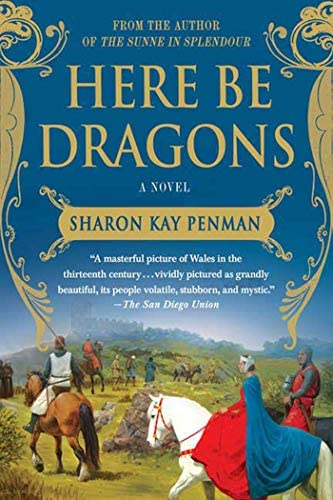
By Sharon Kay Penman
Holt, Rinehart & Winston, 1985. 704 pages. Fiction


Thirteenth-century Wales is a divided country, ever at the mercy of England's ruthless, power-hungry King John. Then Llewelyn, Prince of North Wales, secures an uneasy truce with England by marrying the English king's beloved, illegitimate daughter, Joanna. Reluctant to wed her father's bitter enemy, Joanna slowly grows to love her charismatic and courageous husband who dreams of uniting Wales. But as John's attentions turn again and again to subduing Wales--and Llewelyn--Joanna must decide to which of these powerful men she owes her loyalty and love.A sweeping novel of power and passion, loyalty and lives, this is the book that began the trilogy that includes FALLS THE SHADOW and THE RECKONING.

MGB

Friday, December 9, 2022

A Morbid Taste For Bones

 A Morbid Taste for Bones

By Ellis Peters

Warner Books, 1994. 197 pages. Mystery

A Welsh Benedictine monk living at Shrewsbury Abbey in western England, Brother Cadfael spends much of his time tending the herbs and vegetables in the garden—but now there's a more pressing matter. Cadfael is to serve as translator for a group of monks heading to the town of Gwytherin in Wales. The team's goal is to collect the holy remains of Saint Winifred, which Prior Robert hopes will boost the abbey's reputation, as well as his own. But when the monks arrive in Gwytherin, the town is divided over the request. When the leading opponent to disturbing the grave is found shot dead with a mysterious arrow, some believe Saint Winifred herself delivered the deadly blow. Brother Cadfael knows an earthly hand did the deed, but his plan to root out a murderer may dig up more than he can handle.

Every time the winter season begins, I inexplicably find myself drawn to medieval things. As mystery is my favorite genre, what better than a medieval mystery? Brother Cadfael is an instantly likeable character. His rough history as a crusader and his knowledge of herbs are fascinating aspects of his personality. Ellis Peters writes in a way that is both simple and surprisingly moving. She depicts the medieval world of Shrewsbury in a way that makes you think she's been there. Whether as a standalone novel, or the beginning of a satisfying series, 'A Morbid Taste for Bones' is a great mystery with wonderfully juicy details, and a gamut of interesting and memorable characters.  

If you like A Morbid Taste for Bones, you might also like: 

By Sharon Kay Penman
H. Holt, 1996. 291 pages. Mystery

The story is set in 1193, when Richard the Lionhearted and Eleanor of Aquitane ruled Britain. Coming upon a brutal roadside attack, young Justin de Quincy successfully drives away the assailants but not before one of the victims, a wealthy goldsmith called Gervase Fitz Randolph, dies. Fitz Randolph was on his way to the royal court, carrying a letter with the news that King Richard has been captured. Justin delivers the letter and is stunned when Eleanor begs him to find Fitz Randolph's killer. So begins a multilayered plot filled with political machinations. Even readers who find medieval history sleep-inducing will be caught up in this masterfully told tale. Penman's authentic period details, larger-than-life characters, and fast-paced plot add up to great reading for both mystery fans and history buffs.


By Umberto Eco
1st Harvard Edition, 1994. 536 pages. Fiction

The year is 1327. Franciscans in a wealthy Italian abbey are suspected of heresy, and Brother William of Baskerville arrives to investigate. When his delicate mission is suddenly overshadowed by seven bizarre deaths, Brother William turns to the logic of Aristotle, the theology of Aquinas, and the empirical insights of Roger Bacon to find the killer. He collects evidence, deciphers secret symbols and coded manuscripts, and digs into the eerie labyrinth of the abbey ("where the most interesting things happen at night") armed with a wry sense of humor and a ferocious curiosity.


MGB