Wednesday, May 7, 2025
Humble Pi : When Math Goes Wrong in the Real World
Wednesday, April 16, 2025
Sisters in Science
by Olivia Campbell
Park Row Books, 2024. 384 pages. Nonfiction
In the 1930s, Germany was a hotbed of scientific thought. But after the Nazis took power, Jewish and female citizens were forced out of their academic positions. Hedwig Kohn, Lise Meitner, Hertha Sponer, and Hildegard Stücklen were eminent in their fields, but they had no choice but to flee due to their Jewish ancestry or anti-Nazi sentiments. Their harrowing journey out of Germany became a life-and-death situation that required herculean efforts of friends and other prominent scientists. No matter their destination, each woman revolutionized the field of physics when all odds were stacked against them, galvanizing young women to do the same.
This book was a fascinating combination of some of my favorite types of nonfiction: it's a history book, an approachable science book, and the stories of real-life people all rolled into one. The combination of subjects gave me a new perspective on European history of the 1930s and 1940s, and helped me see how the rise of Nazism affected both the lives of real-life people, and the fate of scientific study. Those who enjoy well-told histories and biographies will find a lot to appreciate in this book.
If you like Sisters in Science you might also like:
The Elements of Marie Curie: How the Glow of Radium Lit a Path for Women in Scienceby Dava Sobel
Atlantic Monthly Press, 2024. 318 pages. Nonfiction
A luminous chronicle of the most famous woman in the history of science, and the untold story of the many remarkable young women trained in her laboratory who were launched into stellar scientific careers of their own.
The Six: The Untold Story of America's First Women Astronautsby Loren Grush
Scribner, 2023. 422 pages. Nonfiction
When NASA sent astronauts to the moon in the 1960s and 1970s the agency excluded women from the corps, arguing that only military test pilots--a group then made up exclusively of men--had the right stuff. Eventually, though, NASA recognized its blunder and opened the application process to a wider array of hopefuls, regardless of race or gender. From a candidate pool of 8,000 six elite women were selected in 1978--Sally Ride, Judy Resnik, Anna Fisher, Kathy Sullivan, Shannon Lucid, and Rhea Seddon.
MB
Wednesday, February 28, 2024
The Milky Way
By Moiya McTier
Grand Central Publishing, 2022. 244 pages. Nonfiction
After a few billion years of bearing witness to life on Earth, of watching one hundred billion humans go about their day-to-day lives, of feeling unbelievably lonely, and of hearing its own story told by others, the Milky Way would like a chance to speak for itself. All one hundred billion stars and fifty undecillion tons of gas of it. It all began some thirteen billion years ago, when clouds of gas scattered through the universe's primordial plasma just could not keep their metaphorical hands off each other. They succumbed to their gravitational attraction, and the galaxy we know as the Milky Way was born. Since then, the galaxy has watched as dark energy pushed away its first friends, as humans mythologized its name and purpose, and as galactic archaeologists have worked to determine its true age (rude). The Milky Way has absorbed supermassive (an actual technical term) black holes, made enemies of a few galactic neighbors, and mourned the deaths of countless stars. After all this time, the Milky Way finally feels that it's amassed enough experience for the juicy tell-all we've all been waiting for.
I have two very bad habits. First, I buy nonfiction books about science and lose the motivation to read them. Second, when I happen to read anything science related I just skip right over the numbers regardless of how important they are. This book fixed both problems. McTier presents scientific concepts in an accessible voice that allows even the most inexperienced science-lovers to engage with new concepts and ideas. I love the blend of artful storytelling and hard science. The voice of the Milky Way is unique, funny, and extremely endearing. I would recommend this book to anybody that's new to astronomy and everyone that supports STEAM over STEM.
If you like The Milky Way, you might also like:
By Joe Roman
If forests are the lungs of the planet, then animals migrating across oceans, streams, and mountains—eating, pooping, and dying along the way—are its heart and arteries, pumping nitrogen and phosphorus from deep-sea gorges up to mountain peaks, from the Arctic to the Caribbean. Without this conveyor belt of crucial, life-sustaining nutrients, the world would look very different. Eat, Poop, Die takes readers on an exhilarating global adventure, revealing the remarkable ways in which the most basic biological activities of animals make and remake the world—and how a deeper understanding of these cycles provides us with opportunities to undo the damage humanity has wrought on the planet.
By Caitlin Doughty
W.W. Norton & Company, 2019. 222 pages. Nonfiction
Licensed mortician Caitlin Doughty answers real questions from kids about death, dead bodies, and decomposition. Every day, funeral director Caitlin Doughty receives dozens of questions about death. What would happen to an astronaut's body if it were pushed out of a space shuttle? Do people poop when they die? Can Grandma have a Viking funeral? In the tradition of Randall Munroe's What If?, Will My Cat Eat My Eyeballs?, blends scientific understanding of the body and the intriguing history behind common misconceptions about corpses to offer factual, hilarious, and candid answers to thirty-five urgent questions.
By Mark Shultz
Hill and Wang, 2009. 150 pages. Graphic Novels, Nonfiction
Let's face it: From adenines to zygotes, from cytokinesis to parthenogenesis, even the basics of genetics can sound utterly alien. So who better than an alien to explain it all? Enter Bloort 183, a scientist from an asexual alien race threatened by disease, who's been charged with researching the fundamentals of human DNA and evolution and laying it all out in clear, simple language so that even his slow-to-grasp-the-point leader can get it. In the hands of the award-winning writer Mark Schultz, Bloort's predicament becomes the means of giving even the most science-phobic reader a complete introduction to the history and science of genetics that's as easy to understand as it is entertaining to read.
KJ
Thursday, June 1, 2023
What's Gotten Into You?
This book takes on the big task of summarizing a variety of ideas ranging across a variety of scientific pursuits, all to answer the question: What are our foundational elements, and how do they work together? This is also one of the most accessible versions of this type of book that I've read. What I especially appreciated was that Levitt tackles the questions of not just how the elements that make up our bodies were formed (which many popular astrophysics books tackle), but also how they combined and evolved over time to create sustainable life. For that reason, the chapters on the discovery of photosynthesis, and how cells came to be, were the most interesting chapters to me. I also appreciated the stories of the scientists whose work led to what we understand about our world today. This is a great introduction to scientific principles that will appeal to anyone curious about the science behind the origin of life.
If You Like What's Gotten Into You? you might also like:
Another accessible astrophysics book, particle physicist Harry Cliff parses the discovery of the various pieces of fundamental matter that create our universe by examining Carl Sagan's famous statement: "If you wish to make an apple pie from scratch, you must first invent the universe." In order to do that, Cliff visits some of the most famous labs across the earth that focus on this research.
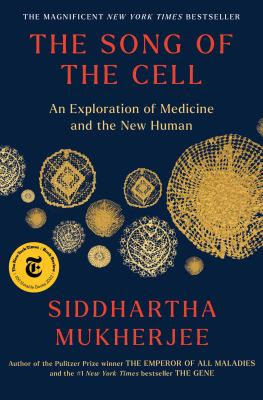
The discovery of cells—and the reframing of the human body as a cellular ecosystem—announced the birth of a new kind of medicine based on the therapeutic manipulations of cells. A hip fracture, a cardiac arrest, Alzheimer's, dementia, AIDS, pneumonia, lung cancer, kidney failure, arthritis, COVID—all could be viewed as the results of cells, or systems of cells, functioning abnormally. And all could be perceived as loci of cellular therapies. In The Song of the Cell, Mukherjee tells the story of how scientists discovered cells, began to understand them, and are now using that knowledge to create new treatments and new humans.
Nonpareil science writer David Quammen explains how recent discoveries in molecular biology can change our understanding of evolution and life's history, with powerful implications for human health and even our own human nature.
MB
Friday, March 31, 2023
Platonic: How the Science of Attachment Can Help You Make - and Keep - Friends
by Marisa G. Franco, Ph.D.
G.P. Putnam’s Sons, 2022. 336 pages. Nonfiction
You’ve probably heard of attachment theory – how you can have a secure, anxious, or avoidant attachment style – as it applies to romantic relationships. In Platonic, psychologist and researcher Marisa G. Franco instead applies the science of attachment theory to friendships. She explores the deep importance of adult friendship to our physical and mental well-being, in spite of our cultural tendency to devalue friendship in comparison with romantic and family relationships.
This is a great pick for book clubs and self-help readers, especially for those who are interested in relationships and psychology. Franco discusses in detail how meaningful friendships enrich our lives and improve our health, while also diving into just how to make friends as an adult. She explains scientific research and studies in easy-to-understand terms, with many real life stories mixed in.
If you like Platonic, you might also like:
The Good Life: Lessons from the World’s Longest Scientific Study of Happinessby Robert Waldinger, M.D. and Marc Schulz, Ph.D.
Simon & Schuster, 2023. 352 pages. Nonfiction
What makes a life fulfilling and meaningful? The simple but surprising answer is: relationships. The stronger our relationships, the more likely we are to live happy, satisfying, and overall healthier lives. In fact, the Harvard Study of Adult Development reveals that the strength of our connections with others can predict the health of both our bodies and our brains as we go through life.
by Diane Poole Heller, Ph.D.
Sounds True, 2019. 224 pages. Nonfiction
From our earliest years, teaches Diane Poole Heller, we develop an attachment style that follows us through life, replaying in our intimate relationships, with our children, and at work. And traumatic events can deeply affect that core relational blueprint. With The Power of Attachment, a pioneer in attachment theory and trauma resolution brings together these two fields to help us understand and benefit from their complementary principles and methods.
SGR
Tuesday, January 11, 2022
How to Make an Apple Pie from Scratch
Tuesday, August 31, 2021
Cultish: The Language of Fanaticism
Monday, August 2, 2021
Project Hail Mary
by Andy Weir
Ballantine Books, 2021. 476 pages. Science Fiction
Ryland Grace is the sole survivor on a desperate, last-chance mission--and if he fails, humanity and the earth itself will perish. Except that right now, he doesn't know that. He can't even remember his own name, let alone the nature of his assignment or how to complete it. All he knows is that he's been asleep for a very, very long time. And he's just been awakened to find himself millions of miles from home, with nothing but two corpses for company. His crewmates dead, his memories fuzzily returning, Ryland realizes that an impossible task now confronts him.
If you liked Project Hail Mary, then you might also like:
How to Astronaut
by Terry Virts
Workman Publishing, 2020. 310 pages. Science Nonfiction
Former NASA astronaut Terry Virts offers an insider's guide to astronauting with a behind-the-scenes look at the training, the basic rules, lessons, and procedures of space travel, including how to deal with a dead body in space, what it's like to film an IMAX movie in orbit, what exactly to do when nature calls, and much more.
Goldilocks
by Laura Lam
Orbit, 2020. 340 pages. Science Fiction
A gripping science fiction thriller where five women task themselves with ensuring the survival of the human race. Despite increasing restrictions on the freedoms of women on Earth, Valerie Black is spearheading the first all-female mission to a planet in the Goldilocks Zone, where conditions are just right for human habitation.
Friday, May 28, 2021
Sapiens: A Graphic History
Tuesday, May 4, 2021
Cosmic Queries

By Neil deGrasse Tyson
National Geographic, 2021. 309 pages. Science
Tyson and coauthor James Trefil, a renowned physicist and science popularizer, take on the big questions that humanity has been posing for millennia—How did life begin? What is our place in the universe? Are we alone?—and provide answers based on the most current data, observations, and theories. Populated with paradigm-shifting discoveries that help explain the building blocks of astrophysics, this relatable and entertaining book will engage and inspire listeners of all ages.

Nobel Prize winner Frank Wilczek's Fundamentals is built around a simple but profound idea: the models of the world we construct as children are practical and adequate for everyday life, but they do not bring in the surprising and mind-expanding revelations of modern science. To do that, we must look at the world anew, combining clear thinking with an openness to wonder. This "born again" world is in many ways larger, fuller, and much stranger than it appears.

Award-winning astronomer Emily Levesque shares the stories of modern-day stargazers, the people willing to adventure across high mountaintops and to some of the most remote corners of the planet, all in the name of science. From the lonely quiet of midnight stargazing to tall tales of wild bears loose in the observatory, The Last Stargazers is a love letter to astronomy and an affirmation of the crucial role that humans can and must play in the future of scientific discovery.