Showing posts with label MGB. Show all posts

Thursday, July 2, 2026

Charlotte Brontë's Life Through Clothes

Charlotte Brontë's Life Through Clothes

By: Eleanor Houghton

Bloomsbury Visual Arts 2026. 355 pages. Nonfiction

Meet the real, thinking, feeling woman that was Charlotte Brontë, as told in this biography by the surviving witnesses to her life - the clothes that she once wore. These garments were present as she penned Jane Eyre , as she walked the cobbled streets of Haworth, and as she stood with her fiancé at the altar in the summer of 1854. Yet, until now, their testimonies had remained unheard. Renowned Brontë scholar and dress historian Eleanor Houghton's innovative, richly illustrated biography, Charlotte Brontë's Life Through Clothes, finally gives voice to the gowns, bonnets, shawls, corsets, parasols and boots that make up the novelist's wardrobe. Secrets are revealed in their very fibres. Brontë's steel busked corset tells the story of corporate espionage and forbidden love, whilst her striped, silk dress shows how she coped with the new-found pressures of fame. When exposed to 21st century technology, a tiny sample of fabric from her 'Thackeray Dress' reveals important innovations of the Industrial Revolution going on around her and a black lace veil, worn after the deaths of her siblings, expresses how she dealt with repeated familial loss. These clothes, some of which still bear the imprint of her foot or the sweat from her pores, prove themselves to be far more than mere celebrity curios. When 'read' alongside letters, portraits, her novels and the recollections of those who knew her well, Charlotte emerges as a woman altogether braver, more vulnerable, less isolated, less provincial, more fashion conscious than anyone ever expected.

This is a fascinating, tangible history of the famed and mysterious Charlotte Brontë, throwing light on her brief and fascinating life. An added element to this account is Houghton's meticulously hand-drawn depictions of the dresses and clothing accessories - there are no photographs. This makes this book a unique biography, and the beautiful art compliments the era, and Charlotte Brontë and her sister's lives. As the author points out, photographs of the items are available, and if you're able to visit the Brontë Parsonage Museum, you can see them in person. Houghton's drawings bring beauty and a sense of intimacy in this unique and highly recommended biography, emphasizing that the domestic details - what we wear day to day - is part of our story too. 

If you like Charlotte Brontë's Life Through Clothes, you might also like: 

By Deborah Lutz
Norton & Company, 2015. 310 pages. Nonfiction.

Victorian literature scholar Deborah Lutz illuminates the complex and fascinating lives of the Brontës through the things they wore, stitched, wrote on, and inscribed. By unfolding the histories of the meaningful objects in their family home in Haworth, Lutz immerses readers in a nuanced re-creation of the sisters' daily lives while moving us chronologically forward through the major biographical events: the death of their mother and two sisters, the imaginary kingdoms of their childhood writing, their time as governesses, and their determined efforts to make a mark on the literary world. From the miniature books they made as children to the blackthorn walking sticks they carried on solitary hikes on the moors, each personal possession opens a window onto the sisters' world, their beloved fiction, and the Victorian era. A description of the brass collar worn by Emily's bull mastiff, Keeper, leads to a series of entertaining anecdotes about the influence of the family's dogs on their writing and about the relationship of Victorians to their pets in general. The sisters' portable writing desks prove to have played a crucial role in their writing lives: it was Charlotte's snooping in Emily's desk that led to the sisters' first publication in print, followed later by the publication of Jane Eyre and Wuthering Heights. Charlotte's letters provide insight into her relationships, both innocent and illicit, including her relationship with the older professor to whom she wrote passionately. And the bracelet Charlotte had made of Anne and Emily's intertwined hair bears witness to her profound grief after their deaths. Lutz captivatingly shows the Brontës anew by bringing us deep inside the physical world in which they lived and from which their writings took inspiration.

By Kate Strasdin
First Pegasus Books, 2023. 303 pages. Nonfiction

In 1838, a young woman was given a diary on her wedding day. Collecting snippets of fabric from a range of garments - some her own, others donated by family and friends - she carefully annotated each one, creating a unique record of their lives. Her name was Mrs Anne Sykes. Nearly two hundred years later, the diary fell into the hands of Kate Strasdin, a fashion historian and museum curator. Using her expertise, Strasdin spent the next six years unravelling the secrets contained within the album's pages, and the lives of the people within. Her findings are remarkable. Piece by piece, she charts Anne's journey from the mills of Lancashire to the port of Singapore before tracing her return to England in later years. Fragments of cloth become windows into Victorian life: pirates in Borneo, the complicated etiquette of mourning, poisonous dyes, the British Empire in full swing, rioting over working conditions and the terrible human cost of Britain's cotton industry. This is life writing that celebrates ordinary people: not the grandees of traditional written histories, but the hidden figures, the participants in everyday life. Through the evidence of waistcoats, ball gowns and mourning outfits, Strasdin lays bare the whole of human experience in the most intimate of mediums: the clothes we choose to wear.

By Laurel Thatcher Ulrich. Alfred A. Knopf, 2001. 501 pages. Nonfiction

They began their existence as everyday objects, but in the hands of award-winning historian Laurel Thatcher Ulrich, fourteen domestic items from preindustrial America-ranging from a linen tablecloth to an unfinished sock-relinquish their stories and offer profound insights into our history. In an age when even meals are rarely made from scratch, homespun easily acquires the glow of nostalgia. The objects Ulrich investigates unravel those simplified illusions, revealing important clues to the culture and people who made them. Ulrich uses an Indian basket to explore the uneasy coexistence of native and colonial Americans. A piece of silk embroidery reveals racial and class distinctions, and two old spinning wheels illuminate the connections between colonial cloth-making and war. Pulling these divergent threads together, Ulrich demonstrates how early Americans made, used, sold, and saved textiles in order to assert their identities, shape relationships, and create history.

MGB

Saturday, May 2, 2026

Well Lived

Well Lived
By Sally Clarkson
Harvest House Publishers, 2024. 213 pages. Nonfiction

In this inspiring blend of personal reflections and stunning photography, bestselling author Sally Clarkson shares how God's grace can lead to a joyful, purposeful life. Drawing from her experiences in Oxford and ministry, she offers wisdom on discipleship, family, hospitality, and cultivating joy--encouraging readers to deepen their faith and embrace a life of meaning and encouragement.

I recently read (and reviewed) a book by Sarah Clarkson. I didn't realize at the time that she has a sister (Joy Marie Clarkson) and mother (Sally) who also write books! I am delighted with them all. On account of Sarah living in Oxford with her husband (a Church of England minister) and children, Sally has been able to live in, and get to know the ancient and beautiful city of Oxford. There is nothing boastful about her book, and she shares a lot of Christian wisdom with the reader, giving you the feeling of being an old friend. The book is not only filled with Clarkson's wisdom, but with beautiful photographs of gardens, old buildings, and delightful cafes. I am really impressed by the Clarkson family: their sincerity, their love of beauty and the people around them, and their love of God is really moving and inspiring to me. I recommend this to any who would appreciate the atmosphere of C.S. Lewis, likes a cozy cup of tea, or would like to live a life of daily beauty and devotion. 

If you liked Well Lived, you might also like: 


By Christie Purifoy
Harvest House Publishers, 2026. 205 pages. Nonfiction

What makes a house a home? It's a question with countless answers, wholly unique to each of us. Yet a common thread runs through the stories we tell about the places that bring us meaning and peace. No matter how we define it, home must evoke a strong sense of comfort. Join acclaimed writer Christie Purifoy as she reflects on what makes a home truly special. Through practical tips on decor inspiration, thrifting, and personal homemaking traditions, Christie shows you how to craft a space that feels wholly yours. With insights drawn from her own experiences, you'll discover how to build sacred spaces that promote rest, welcome, and healing. With creativity and care, you can cultivate comfort in the house where you live.

By Madeleine L' Engle
Harper One, 1972. 245 pages. Nonfiction

A Circle of Quiet is a 1972 memoir by Madeleine L'Engle, the first in her Crosswicks Journals series, that reflects on her life as a writer, wife, and mother, exploring themes of creativity, faith, and finding balance, all set at her family's Connecticut farmhouse, Crosswicks. It's a personal, journal-like book that delves into her creative process, the rejections and success of A Wrinkle in Time, and her search for meaning, offering an intimate look at the author behind the famous children's books.


By C.S. Lewis
Harcourt, Brace & Co., 1955. 238 pages. Nonfiction

A young man who wishes to remain a sound Atheist cannot be too careful of his reading. There are traps everywhere . . . God is, if I may say it, very unscrupulous." This book is not an autobiography. It is not a confession. It is, however, certainly one of the most beautiful and insightful accounts of a person coming to faith. Here, C.S. Lewis takes us from his childhood in Belfast through the loss of his mother, to boarding school and a youthful atheism in England, to the trenches of World War I, and then to Oxford, where he studied, read, and, ultimately, reasoned his way back to God. It is perhaps this aspect of Surprised by Joy that we--believers and nonbelievers--find most compelling and meaningful; Lewis was searching for joy, for an elusive and momentary sensation of glorious yearning, but he found it, and spiritual life, through the use of reason. In this highly personal, thoughtful, intelligent memoir, Lewis guides us toward joy and toward the surprise that awaits anyone who seeks a life beyond the expected.

Monday, March 2, 2026

Reclaiming Quiet: cultivating a life of holy attention

Reclaiming Quiet: cultivating a life of holy attention 
By Sarah Clarkson
Baker Books, 2024. 188 pages. Nonfiction 

Recapture wonder and learn to live by the healing shapes and rhythms of stillness In a restless and distracted world, the cultivation of quiet often feels abstract and impossible. But quiet is, and always has been, essential to spiritual life, the only way we can turn from the frenzy toward the peace for which we were created. Reclaiming Quiet is an invitation to discover the profound, daily joy of resisting patterns of anxiety and hurry and cultivating a life of holy attention instead. With practical strategies to address our use of screens or fear of silence and compassionate ideas to nourish stillness, listening, and rest, this book explores: what it means to become a person who listens each day for God's voice before all others; how to reclaim wonder in prayer; how to cultivate an interior life.  Quiet is not for specialists or the ultra-disciplined. It's not limited to those who have great swathes of time. Quiet is our inner native land, the place to which we turn to find God already waiting, calling us beloved, and drawing us homeward into a life of holy and joyous attention.

From the first page of this short yet powerful book, I was deeply moved. I wanted to read it all at once, absorb what it was saying, but also I wanted to linger over it, ponder the questions that Clarkson has at the end of each chapter, linger over the beautiful prayers she has written. Though her life sounds romantic - living in a Victorian house in Oxford, England, Clarkson doesn't shy away from sharing her struggles throughout her life with mental health, and the ways in which she struggles from day to day. Her suggestions are humble and beautiful, she never comes across as a privileged or condescending. Her descriptions of experiences, landscapes and decisions she's faced were relatable and touching to me. I would recommend this to anyone who is grappling with the distractions of modern life and technology and is seeking both to become more grounded, and to deepen their understanding of God, whichever branch of Christianity you might belong to. 
 
If you like Reclaiming Quiet, you might also like: 

By Melanie Barnes
Rock Point, 2019. 128 pages. Nonfiction

Seeking Slow provides you with the tools you need to slow down and reconnect with the harmonious rhythm of daily life, the gentle pace of nature, and, most importantly, yourself.


By Robert Cardinal Sarah
Ignatius Press, 2017. 249 pages. Nonfiction
 
In a time when technology penetrates our lives in so many ways and materialism exerts such a powerful influence over us, Cardinal Robert Sarah presents a bold book about the strength of silence. The modern world generates so much noise, he says, that seeking moments of silence has become both harder and more necessary than ever before. Silence is the indispensable doorway to the divine, explains the cardinal in this profound conversation with Nicolas Diat. Within the hushed and hallowed walls of the La Grande Chartreux, the famous Carthusian monastery in the French Alps, Cardinal Sarah addresses the following questions: Can those who do not know silence ever attain truth, beauty, or love? Do not wisdom, artistic vision, and devotion spring from silence, where the voice of God is heard in the depths of the human heart? After the international success of God or Nothing, Cardinal Sarah seeks to restore to silence its place of honor and importance. "Silence is more important than any other human work," he says, "for it expresses God. The true revolution comes from silence; it leads us toward God and others so as to place ourselves humbly and generously at their service."

MGB

Monday, February 2, 2026

Bog Queen: a novel

Bog Queen: a novel
By: Anna North
Bloomsbury Publishing, 2025. 264 pages. Fiction

When a body is found in a bog in northwest England, Agnes, an American forensic anthropologist, is called to investigate. Agnes has always been more comfortable with the dead than the living, but this body is not like any she's ever seen. Though its bones prove it was buried more than two thousand years ago, it is almost completely preserved. The mystery of the Iron Age body draws the attention of numerous groups with competing interests : the archaeologists who want to study the surrounding bog, the peat-cutters who want to profit from the land's resources, and a group of environmental activists and neo-pagans who demand the body be returned to its resting place and that the moss-layered bog -- a marvel of carbon capture on a warming planet -- be left undisturbed. Then there's the moss itself ; a complex repository of artifacts and remains, with its own dark stories to tell. As Agnes is drawn into the controversy stirred by the body and its habitat, she must face not only the deep history of what she has unearthed, but also the relationships she has forsworn in her bid for independence.


From the first page, I was hooked. North has a lyrical way of describing Agnes and the way she looks at people - both the living and the dead. I was fascinated by how she could read people's trauma, pain or fear by the way they walked or stood. The novel is told from several viewpoints: the moss, Agnes, and the Bog Queen herself (a woman from the Iron Age), and they all weave together magically. I feel as though the author was heavily influenced by the "Lindow Man", a well-preserved bog body discovered in the Lindow Moss in 1983 ('The Life and Death of a Druid Prince' is a very readable nonfiction book about the study of his body and what they suppose his life was like). The historical details, archaeology and the emotional journey that Agnes experiences are all fascinating elements to the story. I would highly recommend this unique novel.
 
If you like Bog Queen, you might also like: 

By: Alice Roberts
Simon & Schuster Ltd, 2021. 431 pages. Nonfiction.

'Most of what we know about our Anglo-Saxon ancestors comes from their graves, ' said Tony Robinson in the opening to a 2001 Time Team episode about the excavation of an Anglo-Saxon cemetery. He wasn't wrong. But this isn't only true of the Anglo-Saxons. Graves provide us with an extraordinarily detailed picture of the past. We may be looking at someone long dead, but we learn as much about life in the past, as we do about death, from these remains. Now, in her superb new book Ancestors, Alice Roberts investigates seven British graves to discover all that we can learn about our forebears, dating back to Neanderthal times some 220,000 years ago in North Wales right up to the Iron Age burial site in Pocklington, Yorkshire, dating back about 2500 years. The seven burials in this book stand out because they are so rich in detail, so emblematic of a particular time and place, or because they tell us unexpected things about our ancestors.

By: Claire Cameron
Little Brown and Company, 2017. 277 pages. Fiction

40,000 years in the past, the last family of Neanderthals roams the earth. After a crushingly hard winter, their numbers are low, but Girl, the oldest daughter, is just coming of age and her family is determined to travel to the annual meeting place and find her a mate. But the unforgiving landscape takes its toll, and Girl is left alone to care for Runt, a foundling of unknown origin. As Girl and Runt face the coming winter storms, Girl realizes she has one final chance to save her people, even if it means sacrificing part of herself. In the modern day, archaeologist Rosamund Gale works well into her pregnancy, racing to excavate newly found Neanderthal artifacts before her baby comes. Linked across the ages by the shared experience of early motherhood, both stories examine the often taboo corners of women's lives. Haunting, suspenseful, and profoundly moving, THE LAST NEANDERTHAL asks us to reconsider all we think we know about what it means to be human.

By: Elly Griffiths
Mariner Books, 2010. 303 pages. Mystery

When a child's bones are found near an ancient henge in the wild saltmarshes of Norfolk's north coast, Ruth Galloway, a university lecturer in forensic archaeology, is asked to date them by DCI Harry Nelson who thinks they may be the bones of a child called Lucy who has been missing for ten years.


MGB

Thursday, November 6, 2025

The Man in Black

The Man in Black

By Elly Griffiths

Mariner Books, 2024. 310 pages. Mystery

From the internationally bestselling author of the Ruth Galloway Mysteries, an eclectic, thrilling collection of short stories, featuring many characters that readers have come to know and love. Elly Griffiths has always written short stories to experiment with different voices and genres as well as to explore what some of her fictional creations such as Ruth Galloway, Harbinder Kaur, and Max Mephisto might have done outside of the novels. The Man in Black gathers these bite-sized tales all together in one splendid volume. There are ghost stories, cozy mysteries, tales of psychological suspense, and poignant vignettes of love and loss.

I don't always like short stories, so I approached this collection with caution, even though I love author Elly Griffiths and her Ruth Galloway mystery series. A few stories in, I knew I had nothing to fear. I found this collection really charming, thought-provoking and spooky. There's a beautiful tribute to "Little Women", and I think my favorite story was told from the point of view of a cat! She does revisit characters from her series (yay!), but I don't think you need to be familiar with those to enjoy this book. For example, some of the stories featured characters from her Magic Men mysteries, which I haven't read yet. I heartily recommend this book to anyone who loves short stories, mysteries, and charming, odd British tales. 

If you liked The Man in Black, you might also like: 


By P.D. James
Alfred A. Knopf, 2016. 152 pages. Mystery

Four previously uncollected stories from one of the great mystery writers of our time--swift, cunning murder mysteries (two of which feature the young Adam Dalgliesh) that together, to borrow the author's own word, add up to a delightful "entertainment." The newly appointed Sgt. Dalgliesh is drawn into a case that is "pure Agatha Christie." . . . A "pedantic, respectable, censorious" clerk's secret taste for pornography is only the first reason he finds for not coming forward as a witness to a murder . . . A best-selling crime novelist describes the crime she herself was involved in fifty years earlier . . . Dalgliesh's godfather implores him to reinvestigate a notorious murder that might ease the godfather's mind about an inheritance, but which will reveal a truth that even the supremely upstanding Adam Dalgliesh will keep to himself. Each of these stories is as playful as it is ingeniously plotted, the author's sly humor as evident as her hallmark narrative elegance and shrewd understanding of some of the most complex--not to say the most damning--aspects of human nature.


By Dorothy L. Sayers
Perennial, 2001. 474 pages. Mystery

One of the founding mothers of mystery, Dorothy Sayers first introduced the popular character Lord Peter Wimsey in 1923 with the publication of Whose Body? Over the next twenty years, more novels and short stories about the aristocratic amateur sleuth appeared, each one as cunningly written as the next. Now in single volume, here are all the Lord Peter Wimsey stories, a treasure for any mystery lover. From "The Fantastic Horror of the Cat in the Bag" to "The Image in the Mirror" and "Talboys," this collection is Lord Peter at his best -- and a true testament to the art of detective fiction.


MGB

Saturday, May 18, 2024

The Celtic Year

The Celtic Year

By Shirley Toulson

Element Inc, 1993. 259 pages. Nonfiction

Lavishly illustrated throughout with pictures of famous sites and artifacts, maps, and line drawings, this beautifully-written volume is also a collection of prayers, poems, and songs, taken from the rich tradition of both the Celtic Christian and Druid traditions.

I love a well-researched book, and this one doesn't disappoint. It has wonderful information on Celtic saints, their legends and hagiographies, as well as locations of chapels and holy wells dedicated to them. There are interesting illustrations throughout, and ideas and plans for pilgrimages. This is a perfect book for finding out of the way, almost hidden information on Celtic Christianity and customs. 

If you liked The Celtic Year, you might also like: 

By Tracie Long
Wellfleet Press, 2023. 167 pages. Nonfiction

Connect more meaningfully to the cultural wisdom and occult knowledge of the rich and thriving Celtic world. Reclaim ancestral traditions and older ways of connecting with the earth and spirituality by going straight to the heart of mystical traditions. Celtic Mysticism explores the folk magic that has thrived in the British Isles for thousands of years. With this guidebook for both newcomers to magical practice and those searching for a concise reference to a long history, discover how to honor your connection to nature and the rhythms of the seasons in the Celtic way.

By Claire Hamilton
O Books, 2005. 219 pages. Nonfiction

Written in the first person, these provocative and surprising renderings of Celtic tales take us on a challenging journey in which the twelve most ancient and extraordinary goddesses of the land reveal their light and dark faces. In the brining their symbolism to life for today they restore our earlier understanding of war, sex, death, and are turned into spiritual encounters.

By Peter Berresford Ellis
Running Press, 2008. 629 pages. Nonfiction


In this collection from Irish, Scots, Welsh, Cornish, Manx, and Breton sources Peter Berresford Ellis has brought together classic myths and legends - featuring such heroes as Cu Chulainn and King Arthur and monsters like the shapeshifting Kelpies and the goblin-like Bukkys - as well as exciting tales which have never before been translated. Berresford Ellis, one of the foremost authorities on the Celts, brings not only his expertise but also his acclaimed skills of storytelling to this original and enthralling selection of gods and goddess, magical weapons and fabulous beasts.

MGB

Monday, April 22, 2024

Reading the Gaelic Landscape = Leughadh Aghaidh na Tire


Reading the Gaelic Landscape = Leughadh Aghaidh na Tire

By John Murray

Whittles Publishing, 2019. 264 pages. Nonfiction

Reading the Gaelic Landscape is essential for anyone who is interested in the Scottish Highlands and its native language. It enables people to read and understand place-names in Gaelic, providing insights into landscape character and history. Following the success of the first edition, this new edition has been expanded and improved with additional images and enhanced drawings.

This is a book that has an impressive amount of data and information concerning Gaelic place names, diving into the different names for hills, mountains, stones, to place names that reference animals, objects, body parts, and violent events of the past. If anyone was planning a trip to the Highlands of Scotland, this would be very worthwhile. But it is deeper than that as well, for it tells the story of the marginalization of the Gaelic-speaking people of Scotland, and how even before the 'Highland Clearances' which began in the 18th century, the language and the people who spoke it were thought of in terms of being foreign and other. Therefore, many of these places were named in a time when the whole population spoke Gaelic, and as that population was driven out, either to other parts of the land that were not as fertile, or out of the country entirely, those names were forgotten (in the 2010 Census in Scotland, only 1.1% of the population now speaks Gaelic!).  As someone who has studied Scottish Gaelic, it is especially poignant to read. I recommend this to anyone who would like to know more about this little-known part of history (unless you're an Outlander fan!), or who loves the natural world and is fascinated by the words and phrases the Scottish people used, and still use to describe it. 

If you like Reading the Gaelic Landscape, you might also like: 

By Robert Macfarlane
Viking, 2012. 432 pages. Nonfiction

In this exquisitely written book, Robert Macfarlane sets off from his Cambridge, England, home to follow the ancient tracks, holloways, drove roads, and sea paths that crisscross both the British landscape and its waters and territories beyond. The result is an immersive, enthralling exploration of the ghosts and voices that haunt old paths, of the stories our tracks keep and tell, and of pilgrimage and ritual. Told in Macfarlane's distinctive voice, The Old Ways folds together natural history, cartography, geology, archaeology and literature. His walks take him from the chalk downs of England to the bird islands of the Scottish northwest, from Palestine to the sacred landscapes of Spain and the Himalayas. Along the way he crosses paths with walkers of many kinds--wanderers, pilgrims, guides, and artists. Above all this is a book about walking as a journey inward and the subtle ways we are shaped by the landscapes through which we move. Macfarlane discovers that paths offer not just a means of traversing space, but of feeling, knowing, and thinking.

By Sam Heughan & Graham McTavish
Hodder & Stoughton, 2020. 294 pages. Nonfiction

From their faithful camper van to boats, kayaks, bicycles, and motorbikes, join stars of Outlander Sam and Graham on a road trip with a difference, as two Scotsmen explore a land of raw beauty, poetry, feuding, music, history, and warfare. Unlikely friends Sam and Graham begin their journey in the heart of Scotland at Glencoe - the site of a great massacre and major clan feud - and travel from there all the way to Inverness and Culloden battlefield, where along the way they experience adventure and a cast of highland characters. In this story of friendship, finding themselves, and whisky, they discover the complexity, rich history and culture of their native country.

By Graham Robb
W.W. Norton & Company, 2018. 334 pages. Nonfiction

Two years ago, Graham Robb moved to a place of legend called the Debatable Land, an independent territory that once served as a buffer between Scotland and England. The oldest detectable territorial division in Great Britain, the Debatable Land was once the bloodiest region in the country. After most of its population was slaughtered or deported, it became the last part of Great Britain to be conquered by England and Scotland. Today, it has vanished from the map and its boundaries are matters of myth and generational memories. Under the spell of a powerful curiosity, Robb began a journey--on foot, by bicycle, and into the past.

MGB

Friday, March 1, 2024

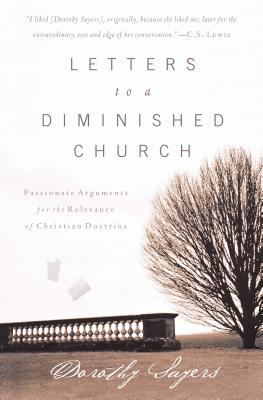
Letters to a Diminished Church

Letters to a Diminished Church   

By Dorothy L Sayers

W Publishing Group, 2004. 284 pages. Nonfiction

In her writings, Dorothy L. Sayers turned the popular perception of Christianity on its head. She argues that the essence of Christianity is in the character of Christ - energetic, dramatic, and utterly alive. This collection of sixteen brilliant essays reveals Sayers at her best - a robust view of Christianity as startling and relevant today as it was fifty years ago.

In the New York Times Book Review, when they interview an author, they often ask them whom they would invite to a dinner party. If I could answer that question, Dorothy L. Sayers would definitely be on my list. Better known for her Lord Peter Wimsey mystery series (which I also love and highly recommend), she was a very intelligent woman who graduated from Oxford in the 1910s, when women earning degrees was still a novelty. She translated Dante's Divine Comedy and was friends with C.S. Lewis. 'Letters to a Diminished Church' is a sharp and pertinent critique of modern society and how religion can sometimes get mixed up with the world, Through that critique, she shows a light on the proper way to live a Christian life, by focusing on the dogma or doctrine of Christianity. Her command of language makes this a delight to read. If you are a fan of C.S. Lewis, I highly recommend this book. 

If you like Letters to a Diminished Church, you might also like: 

By C.S. Lewis
Harper 2001. 227 pages. Nonfiction

One of the most popular introductions to Christian faith ever written, Mere Christianity brings together Lewis's legendary broadcast talks during World War Two. Here, Lewis provides an unequaled opportunity for believers and nonbelievers alike to hear a powerful, rational case for the Christian faith. A collection of scintillating brilliance, Mere Christianity remains strikingly fresh for the modern reader and at the same time confirms C.S. Lewis's reputation as one of the leading writers and thinkers of our age.

By Madeleine L'Engle
Convergent Books, 2017. 224 pages. Nonfiction

Most of the literature on Genesis and creation emphasizes what was created, and how. But in And it was good, Madeleine L'Engle casts long, loving, and perceptive glances at not only the created universe but at its Creator as well. At every level she sees the connections between Made and Maker, and in the vast beauty, order, and complexity of our world she observes many of the characteristics of God, the first poet. Just as L'Engle learns about God from his book Genesis, we learn about this human author from her book And It Was Good, the first volume in her Genesis Trilogy.

By G.K. Chesterton
Garden City, 1955. 280 pages. Nonfiction

According to the evolutionary outlines of history proposed by Wells and others, mankind is simply another sort of animal, and Jesus was a remarkable human being, and nothing more. Chesterton's thesis, as expressed in Part I of the book ('On the Creature Called Man'), is that if man is really and dispassionately viewed simply as another animal, one is forced to the conclusion that he is a bizarrely unusual animal. In Part II ('On the Man Called Christ'), Chesterton argues that if Jesus is really viewed as simply another human leader and Christianity and the Church are simply another human religion, one is forced to the conclusion that he was a bizarrely unusual leader, whose followers founded a bizarrely and miraculously unusual religion and Church. "I do not believe," he says, "that the past is most truly pictured as a thing in which humanity merely fades away into nature, or civilization merely fades away into barbarism, or religion fades away into mythology, or our own religion fades away into the religions of the world. In short I do not believe that the best way to produce an outline of history is to rub out the lines."

MGB

Thursday, February 1, 2024

God was in this place and I, I did not know

God was in this place and I, I did not know

By Lawrence Kushner

Jewish Lights 2016. 183 pages. Nonfiction

In a daring blend of scholarship and imagination, psychology and history, Lawrence Kushner gathers an inspiring range of interpretations of Genesis 28:16 given by sages, from Shmuel bar Nachmani in third-century Palestine to Hannah Rachel Werbermacher of Ludomir who lived in Poland two hundred years ago. Through a fascinating new literary genre and Kushner's creative reconstruction of the teachers' lives and times, we enter the study halls and sit at the feet of these spiritual masters to learn what each discovered about God's Self and ourselves as they ascend and descend Jacob's ladder.

I really loved this book, and how well the author pulls of an entire book discussing one verse of scripture. The story of Jacob is a thought-provoking one on it's own. To dive into one aspect of it brings up so many questions and ideas. What I especially liked was Kushner's warm approach and how the book ends up being a wonderful discussion of being in the moment: what that means and how to do it in our fast-paced modern world. His interpretation of Moses and the burning bush will stay with me for a long time. I highly recommend this book. 

If you liked God was in this place and I, I did not know, you may also like: 

By Harold Kushner
Nextbook 2012. 201 pages. Nonfiction

Draws on lessons from the Book of Job to offer advice on how to retain faith in the face of adversity and explains how to recognize controllable and uncontrollable factors.

Reflections on the Psalms
By C.S. Lewis
Harper Collins 2017 (1958). 178 pages. Nonfiction

In this wise and enlightening book, C. S. Lewis--the great British writer, scholar, lay theologian, broadcaster, Christian apologist, and bestselling author examines the Psalms. As Lewis divines the meaning behind these timeless poetic verses, he makes clear their significance in our daily lives, and reminds us of their power to illuminate moments of grace.

By Jeffrey R. Holland
Deseret Book 2019. 168 pages. Nonfiction

An apostolic witness of Jesus Christ shares notes and insights resulting from his decades of studying the various names of Christ found throughout the scriptures.


MGB

Friday, January 5, 2024

Revelations of Divine Love

Revelations of Divine Love

By Julian of Norwich

Penguin Books, 1998. 192 pages. Nonfiction

Coming from a society where women were barred from serious writing and teaching, Julian, an anchorite of the great medieval city of Norwich, nevertheless uses her womanliness and the English vernacular of the day to describe a series of revelations which she received from God in the year 1373. She identifies the female nature of Christ's suffering and the motherhood of God, using images from domestic daily life, emphasizing the homeliness of God's love. She writes in a lively and unpretentious manner and her theology is precise without ever being pedantic.

C.S. Lewis, when he read Julian of Norwich, wrote in a letter that it is, "A dangerous book; clearly. I'm glad I didn't read it much earlier." Julian's view of God and religion is as fresh and challenging today as it was in Medieval England. There is a fierce joy and beauty in how she views Christ and his care for us, often referring to him as a lover. Whether reading it for historical or spiritual reasons, it is a very worthwhile book to read. As she famously said, "All shall be well and all shall be well, and all manner of thing shall be well." I highly recommend this book! 

If you like Revelations of Divine Love, you might also like: 

By Margery Kemp
Oxford University Press, 2015. 275 pages. Biography
 
The Book of Margery Kempe (c. 1436-8) is the extraordinary account of a medieval wife, mother, and mystic. Known as the earliest autobiography written in the English language, Kempe's Book describes the dramatic transformation of its heroine from failed businesswoman and lustful young wife, to devout and chaste pilgrim. She vividly describes her prayers and visions, as well as the temptations in daily life to which she succumbed before dedicating herself to her spiritual calling. She travelled to the most holy sites of the medieval world, including Rome and Jerusalem. In her life and her boisterous devotion, Kempe antagonized many of those around her; yet she also garnered friends and supporters who helped to record her experiences. Her Book opens a window to the medieval world, and provides a fascinating portrait of one woman's life, aspirations, and prayers.

By Kathleen Norris
Riverhead Books, 1997. 385 pages. Nonfiction

Why would a married woman with a thoroughly Protestant background and often more doubt than faith be drawn to the ancient practice of monasticism, to a community of celibate men whose days are centered around a rigid schedule of prayer, work, and scripture? This is the question that Kathleen Norris herself asks as, somewhat to her own surprise, she found herself on two extended residencies at a Benedictine monastery. Yet upon leaving the monastery, she began to feel herself transformed, and the daily events of her life on the Great Plains - from her morning walk to her going to sleep at night - gradually took on new meaning.

MGB

Friday, December 8, 2023

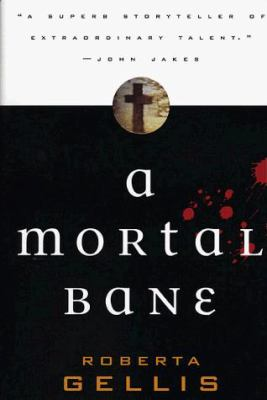
A Mortal Bane

A Mortal Bane

By Roberta Gellis

Forge, 1999. 350 pages. Mystery.

In 12th-century London, the Bishop of Winchester, head of St. Mary Overy Church, has made a most unusual pact with Magdalene la Batarde, a widow who rents from him the church's Old Priory Guesthouse next door. There she runs a quiet, elegant whorehouse whose staff includes blind Sabina, slightly simple Ella, mute Letice, and deaf cook Dulcie. Magdalene no longer plies her trade, but a steady, wealthy clientele keeps the house prosperous. Onto this peaceful scene comes a handsome stranger by misdirection, who turns out to be papal messenger Baldassare de Firenze. In the very early morning he's found, stabbed to death, on the porch of the church next door, and the fanatically pure Sacristan Paulinus accuses the women of murder. The Bishop of Winchester appoints Sir Bellamy of Itchen (more often called Bell), his right-hand man, to investigate the killing and to find the pouch the dead man was carrying. Sir Bellamy and Magdalene put their differences aside to investigate this intriguing murder together. 

This is an interesting premise, especially with a genteel whorehouse filled women who are blind, deaf and dumb. But there are wonderful details on clothing, expressions and details of medieval London that make this a delightful story to read. The mystery itself is wrapped up in the politics of the time, and Gellis takes you into her confidence, as though taking you on a tour of England at that time. I recommend this intriguing historical mystery. 

If you liked A Mortal Bane, you might also like: 

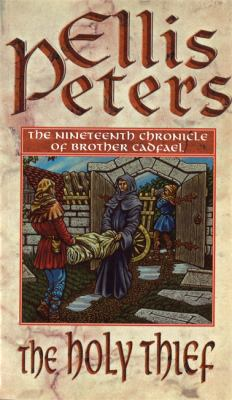
By Ellis Peters
Mysterious Press, 1992. 246 pages. Mystery

In the chill, rainy autumn of 1144, two groups of visitors seek the hospitality of the Abbey of St. Peter and St. Paul, and Brother Cadfael fears trouble has come in with them. Among the first arrivals is Brother Tutilo, a young Benedictine with a guileless face and—to Brother Cadfael’s shrewd eyes—a mischievous intelligence. The second group, a ribald French troubadour, his servant, and a girl with the voice of an angel, seems to Brother Cadfael a catalyst for disaster. All of Cadfael’s fears become manifest as rising floodwaters endanger the abbey’s most sacred relic, the remains of Saint Winifred. When the bones disappear and a dead body is found, Brother Cadfael knows carnal and spiritual intrigues are afoot. Now, in a world that believes in signs and miracles, Brother Cadfael needs his prayers answered—as well as some heavenly guidance to crucial clues—to catch a killer hell-bent on murder.

By Ariana Franklin
Harper Collins 2015. 352 pages. Fiction

1141. England is engulfed in war as King Stephen and his cousin, the Empress Matilda, vie for the crown. In this dangerous world, not even Emma, an eleven-year-old peasant, is safe. A depraved monk obsessed with redheads kidnaps the ginger-haired girl from her village and leaves her for dead. When an archer for hire named Gwyl finds her, she has no memory of her previous life. Unable to abandon her, Gwyl takes the girl with him, dressing her as a boy, giving her a new name--Penda--and teaching her to use a bow. But Gwyn knows that the man who hurt Penda roams free, and that a scrap of evidence she possesses could be very valuable. Gwyl and Penda make their way to Kenilworth, a small but strategically important fortress that belongs to fifteen-year-old Maud. Newly wedded to a boorish and much older husband after her father's death, the fierce and determined young chatelaine tempts fate and Stephen's murderous wrath when she gives shelter to the empress. Aided by a garrison of mercenaries, including Gwyl and his odd red-headed apprentice, Maud will stave off Stephen's siege for a long, brutal winter that will bring a host of visitors to Kenilworth--kings, soldiers . . . and a sinister monk with deadly business to finish.

MGB

Monday, November 20, 2023

Mistletoe Murder: and other stories

Mistletoe Murder: and other stories

By P.D. James

Alfred A. Knopf, 2016. 152 pages. Mystery

Four previously uncollected stories from one of the great mystery writers of our time--swift, cunning murder mysteries (two of which feature the young Adam Dalgliesh) that together, to borrow the author's own word, add up to a delightful "entertainment."Each of these stories is as playful as it is ingeniously plotted, the author's sly humor as evident as her hallmark narrative elegance and shrewd understanding of some of the most complex--not to say the most damning--aspects of human nature.

I have not read James' Dalgleish mysteries, but I was impressed by the story and research that she displayed in "Death Comes to Pemberley". Though there are only four stories in this collection, each was distinct and intriguing. One of the stories is quite disturbing and spooked me for quite a few hours after reading it. I recommend this little volume, its especially good for reading during the holidays, which doesn't afford as much time for a longer novel. 

If you like Mistletoe Murder, you might also like: 

By Michael Sims
Penguin Classics, 2023. 323 pages. Mystery

For The Penguin Book of Murder Mysteries , writer and anthologist Michael Sims did not summon the usual suspects. He sought the unfamiliar, the unjustly forgotten, and little-known gems by writers from outside the genre. This historical tour of one of our most popular literary categories includes stories never-before reprinted, features rebellious early "lady detectives", and spotlights former stars of the crime field. For twenty-first century connoisseurs of crime, The Penguin Books of Murder Mysteries celebrates how the nineteenth century added a fierce modern twist to the ancient theme of bloody murder.


By Martin Edwards
Poisoned Pen Press, 2021. 305 pages. Mystery


A Postman murdered while delivering cards on Christmas morning. A Christmas pine growing over a forgotten homicide. A Yuletide heist gone horribly wrong. When there's as much murder as magic in the air and the facts seem to point to the impossible, it's up to the detective's trained eye to unwrap the clues and neatly tie together an explanation (preferably with a bow on top). Martin Edwards has once again gathered the best of these seasonal stories into a stellar anthology brimming with rare tales, fresh as fallen snow, and classics from the likes of Julian Symons, Margery Allingham, Anthony Gilbert and Cyril Hare. A most welcome surprise indeed, and perfect to be shared between super-sleuths by the fire on a cold winter's night.

MGB