Showing posts with label JMS. Show all posts

Wednesday, April 12, 2017

Luke Skywalker Can't Read: And Other Geeky Truths

By Ryan Britt
Plume, 2015. 224 pages. Nonfiction
Ryan Britt is more than a geek or a hipster; he was both before it was cool (and if you asked him, he’d say it still isn’t). Raised on Barbarella and Star Trek, Britt discusses a lifetime of study of pop culture and what science fiction means to the real world. Half memoir and half analytical essay, Luke Skywalker Can’t Read asserts, among other observations, that the Skywalkers are illiterate, Sherlock Holmes is science fiction, and that monster movies are romantic comedies.


Written in the comedic style of Klosterman and Rooney, Luke Skywalker… demonstrates the benefit of not taking culture too seriously. Though he tackles topics like literacy and religion, he does so light heartedly, not as an expert. My favorite essay was about Back to The Future, where Britt discusses why BTTF is riddled with paradoxes and how this makes it universally loved. Though his understanding of some of the heavier topics is a little light, his wit is not, nor is his research; Britt goes to great lengths to prove his points, though without delving into the overly academic. Luke Skywalker is a great read for nostalgic adults or for older teens curious about why all robots in movies are murderous. 

JMS

Thursday, March 16, 2017

Sins Of Empire

Sins of Empire
by Brian McClellan
Orbit, 2017. 624 pages. Fantasy.

Vlora Flint, a veteran of the Adran revolution and storied powder mage, leads her mercenaries on a hunt for revolutionaries in the swamps of the Fatrastan wilderness. When the despotic ruler of Fatrasta suddenly recalls her Riflejacks to the capital to hunt for a community organizer with ties to rebels, Flint discovers a warren of conspiracies and competing interests. Between murderous rebels, scheming secret police, and the specter of an empire not seen for hundreds of years, it would take a miracle for her people to make it out alive.

Told from the perspectives of Flint, a member of the secret police (Michel Bravis), and a convicted war hero (Ben Stykes), Sins of Empires brings together the best elements of McClellan's talents. Sins brings back the epic rifle and magic battles from the Powder Mage trilogy, along with one of the most creative and interesting magic systems, the competing powder mages (mages who draw strength and speed from imbibing small amounts of gunpowder and can control detonations to manipulate bullets or whole supplies of gunpowder), privileged (who can summon elemental forces like fire and ice), and the mysterious magic of the bone-eyes. While the action and intrigue are as splendid as ever, McClellan's characters in Sins demonstrate new skill and depth. Sins of Empire is already on my list for best books of 2017. At 600 pages, most books will have lulls, but Sins maintains a pace that will keep readers engaged to the very last page.

JMS

Friday, March 10, 2017

Start of Darkness

Start of Darkness
by Rich Burlew
Giant in the Playground, 2007. 116 pages. Fantasy, Graphic Novel

How do villains become monsters? Are they born evil, or are they shaped by their experiences? In this prequel to the Internet sensation Order of the Stick, Burlew explores the origins of the lich Xykon and Redcloak, high priest of the god of goblins. From a boy crying about his dead dog and a young man defending his village, Darkness chronicles their descent into two of the most ruthless characters in comics.  


Start of Darkness is bleak. As a prequel, the end fate of the (an)tagonists is a known factor; as Burlew mentions in his introduction, the villainy demonstrated by Redcloak and Xykon go largely unpunished. Though the story switches around the perspectives, the primary focus is Redcloak. Despite cataloguing in exquisite detail the depths to which he sinks to achieve his goals, Darkness's largest emotional appeal is the humanization (a term he would find terribly specist) of Redcloak and the goblins. The themes of desperate action and sacrifice for the greater good clash with the reckless evil of Xykon. 


Having said all that, Start of Darkness is hilarious. Burlew's simplistic drawing style (including a colorful section of crayon art detailing the creation of the world) downplays much of the darker plot points, while his playful pop culture references and 4th wall breaking make even the transformation of Xkyon from sorcerer to lich funny. Burlew's great strength lies in his ability to seamlessly flit between the humourous and the dramatic. Darkness will be tremendously enjoyable to both fans of the web comic and to new readers. 


JMS

Wednesday, February 22, 2017

1632

1632
by Eric Flint
BAEN Books, 2001, 597 pages, Science Fiction, Historical Fiction. 

A small West Virginia town is mysteriously uprooted and displaced in time and place, finding themselves in the middle of the Thirty Years War. The citizens of Grantville do their best to bring American values and superior rate of fire to 17th century Germany. 

Flint skillfully depicts the horrors of a war torn Europe while juxtaposing it with a character study of small town America. The West Virginians come from a United States somewhat different than our own; published seven months before 9/11, 1632's characters bear less resemblance to an independent Appalachian community and more to citizens of metropolitan areas like New York City. Flint's one concession to life in a small town is the ubiquity of firearms, though this seems parodiable in its extremity. The real strength of the novel comes from the depth of knowledge and detail of 17th century German life. Though Flint's characterization of the Americans is simplistic (the minor antagonist of the main character, his metropolitan father-in-law, is laughably one dimensional), the Europeans are diverse and well-developed. If a bit long winded at times, 1632 is a great read for enthusiasts of historical and alternative fiction. 

Thursday, February 16, 2017

Into the Storm

Into the Storm
by Taylor Anderson
Roc, 2009, 416 pages, Historical Fiction, Sci-fi. 

On the run from the vicious and inexorable Japanese advance in Pacific, the crews of two outdated destroyers find themselves in a strange parallel earth where the catlike Lemurians fight the reptilian Grik for the right to existence itself. Captain Matthew Reddy and the crew of the USS Walker have to decide how to proceed in a war where their ships are the most advanced technology in the world. 

The first in an ongoing series, Into the Storm introduces a diverse cast of characters and explores how this rough group of sailors and soldiers would adapt to something so incredible world altering. Though a Japanese commander also transported to this new world becomes a recurring antagonist, Anderson takes pains to demonstrate the variety of morals among both the Americans and the Japanese, though the alien species almost exclusively delineates into mammals good, reptiles evil. As the series progresses, both the world exposed to the reader and the plot expand in complexity and scope. Anderson writes spectacular naval and land battle scenes, which are only enhanced by the characters discussions and efforts to integrate advanced technology into primitive society, as well as recreate advanced manufacturing. If that sounds dry in description, rest assured that Anderson makes it dramatic and compelling. I would highly recommend this series to anyone who enjoys either science fiction or World War era historical fiction. 

JMS

Monday, January 23, 2017

GURPS For Dummies

Cover image for GURPS for dummiesGURPS for Dummies
by Adam Griffith
For Dummies, 2006. 410 pages. Nonfiction.
If you are new to role playing games or if you are curious to try, GURPS for Dummies is a great help for creating characters, playing, and running a game. GURPS as a system is designed to be as flexible as possible, facilitating any game that players can imagine. It does this through a consistent and balanced set of what essentially constitutes the physics of the world, which players use to create characters and story lines. Because GURPS can be very math heavy in world creation, the For Dummies book is helpful to both new and experienced players who are looking to get the most of out the game.

Consistent with the For Dummies brand, GURPS takes a very conversational tone, taking pains to be simple without being condescending. I really appreciated the top ten lists (especially for the advantages section) because they offer great advice on a variety of play styles. The biggest downside is that it doesn't replace the Basic Set manual (itself a 200 page tome); it merely offers suggestions and explanations for rules. I would recommend GURPS to anyone who would like some help jumping into this great hobby or who is interested in learning more about table-top role playing in general.

JMS

Wednesday, January 18, 2017

One Week in the Library

by W. Maxwell Prince
Image Comics, 2016. 96 pages. Graphic Novels

Told from the perspective of a solitary Librarian, a man both custodian and prisoner of the endless Library that contains every word ever written, One Week in the Library tells a story of books rebelling and a universe falling apart, one week at a time. One Week begins as mildly philosophical and ends in the metaphysical; the final day culminates in an interview between the Librarian and the author, Maxwell Prince. Though the musings of the Librarian and the stories he parses are often dismal, the story itself and his reactions are a droll commentary on the stories we tell.

The artwork by Amor and Layno is beautiful. When the Librarian enters a story, there are both subtle and drastic variations to the illustration styles, primarily dictated by how foreign the current story feels to the Librarian. A section of the plot where the Librarian enters our world combines a drab, uncolored style with interjections of color and absurdities that expertly depict his distress. One Week is a fantastic comic for new adult readers. Fans of the genre will also enjoy it, provided they are comfortable with a philosophical based work. Strong language and a brief vignette about depression and suicide make One Week hard to read at times, but the story is enjoyable and thought provoking.  

JMS

Wednesday, December 21, 2016

Vote Loki

Vote Loki
By Christopher Hastings
Marvel, 2016, 120 Pages, Graphic Novels, Fantasy, Young Adult Fiction

Tired of not being stressed about the election? Get it back and more with this one-shot comic by Chris Hastings. Opening with a quick introduction of original character Nisa Contreras, an up and coming reporter with personal history with Loki, Vote Loki takes readers through a political campaign run by misdirection and the campaign slogan: "If I were your president, I'd lie right to your face, and you'd love it".

The story is silly, outrageous. It's not especially politically, though Loki's speech at the end (where he specifically notes he doesn't have any actual policy positions), is a bit of a jab at the general electorate. The illustrative style focuses on making the superheroes (Loki, Thor, Angela) look like real people; while the scenery becomes stylistic at times, the characters maintain an air of realism. Overall, Vote Loki is a fun, tongue in cheek story about politics. It's a little light on the action for a Marvel production, but the end product is still enjoyable. Hastings well captures the spirit of a contentious election season and encapsulates into an innocuous superhero story.

JMS

Friday, December 16, 2016

Judgment at Verdant Court

Judgment at Verdant Court 
by M.C. Planck
 Pyr, 2016, 343 pages, Fantasy,

 The story of Christopher Sinclair, a man lost in an alternate dimension, continues in the strongest entry yet. Christopher, ever gathering allies and vassals through the innocence of his worldview, faces the challenge of hunting his old champion and friend for committing a terrible crime. On top of this, he is charged with clearing his section of the frontier, a merciless swamp filled with sapient wolves and dinosaurs, of all monsters. The path forward is fraught with dangers both seen and unseen, with the nobility he serves marking the chiefest danger.

I would almost consider the World of Prime series clean reads; there’s no swearing (none in Earth’s idiom, anyways), no sex, but there are moments of brutality that are heartbreaking in their inhumanity. This is one of the stronger points of Planck’s writing; without being graphic he paints a picture of despair and conjures revulsion in his audience when desired, but tempers it with the continual hope of the main character. Christopher's wrestling with the overarching plot point of "Dungeons and Dragons as implemented in life" continues to develop in complexity and depth, while the actual world building going on in the background strengthens the plot and characters considerably. The World of Prime series just keeps getting better.

JMS

Monday, November 14, 2016

Wild Card

Wild Card
by Jim Butcher
Dynamite Entertainment, October 2016. 144 pages. Graphic novel. Fantasy. 


Set in between Dresden Files novels White Night and Small Favor, Wild Card offers a look into the treacherous undercurrent of supernatural Chicago. Dresden, wizard, private eye, and mentor, races to stop a gang war and find the supernatural menace behind the killings that provoked it. Along the way, the reader gets a rare bit of narration by Murphy and Molly. 

Wild Card does a good job of showcasing the various factions Dresden faces off with, from Marcone, the Baron of Chicago, to Lara, the de facto leader of the White Court of vampires. It doesn't especially add to the overall plot line of the series, and the relationships between Dresden and his antagonists are generic, rather than an organic growth from previous material. The artwork is fantastic, however, and Murphy's fight with Puck was easily my favorite part, showing of both the skill of the artist and general epicness of team Dresden's token muggle.  While Wild Card wasn't my favorite addition to the Dresden Files, it was a fun read. The lack of intricate back story actually makes it better for an introduction to the series in graphic novel form; most of Harry's rogues gallery makes an appearance, but none of the overarching plot line is spoiled. If you're like me and eager for Peace Talks to come out, Wild Card is a good diversion to hold you over. 

JMS

Friday, November 4, 2016

Shadow Queen

The Shadow Queen 
by 

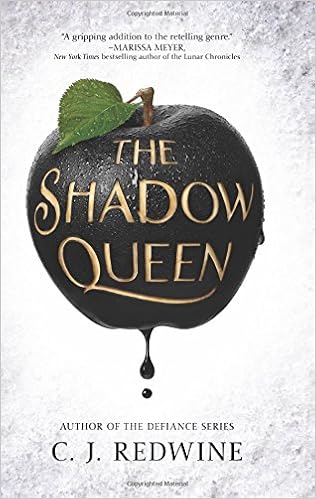
Lorelai and her brother lost everything when their stepmother Irina killed their father and usurped the throne. Prince Kol is desperate to save his kingdom from an endless horde of ogres, and sees the foreign monarch Irina as his people's only hope. Told between these two perspectives as well as from Irina herself, this imaginative retelling of Snow White offers an exciting fantasy adventure that will leave readers excited to read more about the world of Ravenspire. 

Though inspired by the classic tale of Snow White, Shadow Queen transcends the bonds of the original, introducing mystical nature mages known as 'mardushkas', a fascinating race of half-dragons, and a complex political backdrop against which Lorelai wages war against Irina. Elements from Snow White (poisoned apples, a huntsman out for blood, an evil stepmother) appear within the story, but their inclusion elevates the story through subversion of the expected rather than limit the narrative. The love sub-plot remains secondary rather than upstaging the larger struggle; it rests mainly on the development of respect rather than raging hormones (though the pair is teased at one point for having them.) There are hints throughout the story of a larger conflict brewing, but Shadow Queen wraps up neatly enough that it isn't agonizing to wait for a sequel. I really enjoyed it and would recommend it to fans of both fantasy and fairy tales. 

JMS

Friday, October 7, 2016

Reign of Shadows

Reign of Shadows By Sophie Jordan

Harper Collins, 2016. 304 pages. Young adult, fantasy.

The assassination of her royal parents and the onslaught of a sudden and permanent eclipse drove Luna and her guardians into hiding just moments after her birth. For seventeen years, they have lived in seclusion, hiding from both the tyrant who killed her parents and took their throne and from the monsters that erupted from the ground when the sun went black. Hidden in a tower in the middle of the Black Forest, Luna pines for the outside world until the day she rescues a triad of travelers, led by a boy she can't keep off her mind. Her choice to save their lives tears hers apart.

Loosely based on the idea of Rapunzel (rather than the story), Reign of Shadows is a fun blend of light horror, romance, and adventure. The romantic attraction between Luna and Fowler is self-admittedly contrived; Luna scolds herself for being attracted to literally the first boy she's ever met. The world Jordan creates is full of objectively terrifying creatures, but she shies away from delving deeply into that atmosphere. I think I would have liked Reign more if it had been a little less balanced and more focused on one aspect or another, but I still enjoyed it. The early description of Luna versus how Fowler describes her is one of my favorite moments because Fowler's observation changes the way the reader perceives Luna. Reign is a good introduction to horror as a genre, to see if you want more or less.

JMS

Thursday, October 6, 2016

Glitter

Cover image for GlitterGlitter
By Aprilynne Pike
Random House Books for Young Readers, 2016. Young Adult. 384 pages.

Caught in a power play between her mother and a megalomaniacal king and CEO, Danica plots her escape from the cyberpunk parody of Versailles in which she's been trapped. Unfortunately for Danica, her plan is terrible. An engrossing look at how desperation drives individuals to atrocious solutions, Glitter is equal parts Breaking Bad and a recreation of the Bourbon Kings. The 'twenty minutes into the future' technological aspect also invokes questions of privacy, as every aspect of Danica's criminal empire revolves around hiding her enterprise from an all seeing AI that controls the Palace of Versailles. Essentially, a financial collapse in France allows a billionaire to buy Versailles and create his own pocket kingdom where nobility is determined by the number of shares an individual or family owns of his company. His teenage grandson reigns as a budding tyrant after a plane crash claims his parents. From him and the matrimony they are blackmailed into by Danica's mother are what Danica schemes to escape.

I literally couldn't put it down. The primary protagonist and antagonist were equally unlikable, but the palpable desperation Danica exhibits creates an atmosphere where the reader can understand why she makes such terrible choices. While Glitter revolves around dealing drugs, it conveys the message that any victories claimed in such a manner are inevitably Pyrrhic. The drastic contrast between Danica and her parents' goals and coping mechanisms adds an additional air of tragedy, while the crescendoing collapse of her every relationship mirrors the  spiraling increase of the drug market under her thumb. Glitter is a modern tragedy in every sense.

JMS

Saturday, September 10, 2016

Capitalism and Freedom

by Milton Friedman
 University Of Chicago Press, 2002. 230 pages. Nonfiction

Originally published in 1962, this book serves as a foundational piece in economic literature. Capitalism and Freedom argues primarily that the former is a prerequisite for the former; starting with two broad chapters about economic theory and liberty, Friedman progresses to tackle in brief specific areas of American economic and social policy and makes a case for the problems caused by interventionism and how the free market can solve them. While confident in economic analysis, Friedman acknowledges his limited frame of reference, a refreshing trait in a Nobel Prize winning expert. His chapter on education was particularly enjoyable, as he opens with the caveat that he is not an expert in any way on education, but then makes predictions and suggestions that are both accurate and relevant for society in the new millennium.

Capitalism and Freedom walks the line between primer and textbook; while not an introductory work on economics (Friedman does his best to simplify theories and terms for the lay-reader, but assumes a basic knowledge), it also avoids getting bogged down into minutia and complex equations. Where more in-depth questions arise, Friedman clarifies his point and directs the inquisitive reader towards specialized works where authors (including him) have done and explain more detailed research. I would recommend this book for anyone who wants to learn more about economics but doesn’t want to wrestle with equations.

JMS

Tuesday, September 6, 2016

Charming


Image result
Charming
by Elliot James
Orbit, 2013. 480 pages. Fantasy.

Book one of the Pax Arcana series (of which book five, In Shining Armor, was released this April), Charming introduces John Charming, ex-knight Templar, occasional monster hunter, and secret half-werewolf. John reluctantly joins a valkyrie, a priest and a psychic as they hunt a vampire with radical new ideas about who should run the world. Within this frame, James expertly establishes his kitchen-sink style mythos and magic of the “Pax Arcana” that keeps it hidden from the rest of the world.

Charming pulls off that elusive unicorn of creative writing; funny dialogue that feels organic. James breathes life and believability into his characters, especially the antagonists. Picking this up for the first time a few nights ago, I was interested initially by the back cover of the newest book in the series, so I started at the beginning. Even knowing there would be further installments, the narrative kept me in suspense. Most of the material keeping the book from being a clean read was superfluous, but neither was it gratuitous or vulgar. I appreciated the candor of discussing mature topics (such as the prospect of a relationship or the best way to incapacitate an immortal snake monster) without it feeling too racy or graphic. I finished Charming excited to see where the next installments take John and his friends.

JMS

Tuesday, August 16, 2016

Keynes Hayek: The Clash That Defined Modern Economics

Keynes Hayek: The Clash That Defined Modern Economics
By Nicholas Wapshott
W. W. Norton & Company, 2012. 400 pages. Nonfiction. Biography

Nicholas Wapshott compares and contrasts the two leading economists of the modern era, John Maynard Keynes and Friedrich Hayek. Both came from comfortably well off families, though in the First World War, Hayek served in Austria's air force while Keynes worked for the British treasury and helped his friends avoid enlistment. Both men watched in horror as the poor financial decisions of the UK and the punishments of the Treaty of St Germain plunged the world into depression and were inspired to search for the truth of economics. The rivalry between the two schools of thought they developed has defined political economics ever since.


Written in the wake of the 2008 recession and subsequent bailout, Keynes Hayek aims to elucidate the debate between Keynes argument for government intervention and Hayek's argument that government intervention at best only delays the inevitable. Wapshott, a career journalist and prolific biographer, sheds light on both theories by connecting them to the individual; while the subject matter and the need to quote from the two economists and others in the field make the text abstruse at times, his narrative approach allows for understanding by those with no economic background. I highly enjoyed it and would recommend it to anyone hoping to learn more about how the economy works and why it matters what we do to it, though fans of biographies in general will also enjoy it. 

JMS

Saturday, August 6, 2016

Midas Flesh


The Midas Flesh 
By Ryan North
BOOM! Box, 2014. 128 pages. Graphic Novel. Science Fiction. 

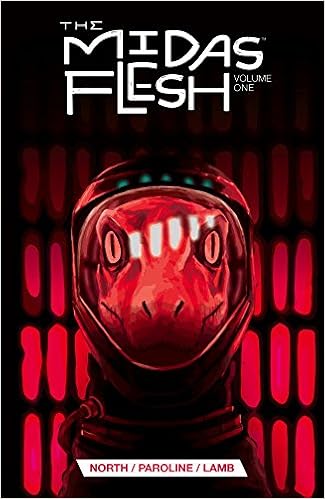
A team of three explorers find their way to a deserted planet, entirely covered in gold. The planet is frozen in a single moment of time, frozen in gold at the exact minute King Midas makes his famous wish. As they race to find what they regard as a super weapon, the powerful federation, conqueror of the known galaxy, closes in. At the heart of the story is the Greek myth of King Midas, as the comic conjectures the final result of absolutely everything Midas touched turning to gold. Featuring a talking dinosaur, a sapient slug, and a diverse cast of humans, the Midas flesh is entertaining from start to finish.

Ryan North’s bizarre and charming story meshes well with Paroline and Lamb’s beautiful artwork. Despite some stressful situations, the language is both developed enough for adults and clean and simple enough for children. The plot is typical of the web comic writer; an old story taken to (what could be called its logical) extreme. Funny and thought provoking, The Midas Flesh is worth your time.

JMS

Tuesday, July 26, 2016

Copperhead

Copperhead, Vol. 1: A New Sheriff in Town TP  
By Jay Faerber
Image Comics, 2015. 128 pgs. Graphic Novel. Science Fiction
Clara Benson, single mother and tough as nails cop, lands a job as the new sheriff on a dusty back-water hole of a planet in the wake of an interstellar war. Here and there the reader gets tidbits of backstory- mention of artificial humans created to fight battles, aliens bitter about the conquest, a separate peace treaty with the mysterious natives- but the real meat of Copperhead lays in Clara’s constant upheaval of the town’s expectations.

Every character in Copperhead’s cast gets a full personality; without dwelling overlong on exposition, Faerber manages to develop motivations and personalities that leave the reader wanting more. Copperhead leans on common tropes for Westerns (Dukes of Hazard fans will recognize the Boss Hogg breed of kingpin), but the science fiction setting throws them into new and fresh light. The artwork is clear and beautiful, and works well with the script to show the deep emotions of the rough characters. Copperhead has action, mystery, and deep family loyalty woven throughout; it is one of my favorite graphic novels. 

JMS

Thursday, July 14, 2016

Wheel of Oshiem

The Wheel of Osheim
By Mark Lawrence
Penguin Publishing Group, 2016. 432 Pages. Science Fiction

The conclusion to Mark Lawrence's second trilogy set in the world of Jorg Ancrath, Wheel of Oshiem brings back the erstwhile Prince Jalan and resolves his quest to save his sister from the clutches of the Dead King. With more responsibility than ever before thrust upon him, Prince Jalan defends his city from the undead horde, saves a caravan from the detonation of a "Builder's Sun", and saves a childhood friend from slavers. The story is interspersed with flashbacks telling of Jalan's journey through the underworld and the revelations he finds there.

Prince Jalan, despite spending the previous two books an avowed and practiced coward, receives a great deal of character development. In previous installments he mainly serves as a foil to his Norse friend Snorri as Snorri journeys through the stages of grief, but now Jalan is forced to deal with the grief in his own past and finds there is courage buried in his heart. The Wheel of Osheim's conclusion will not surprise readers of the Broken Empire series, but it will fill in some details of the story. The main draw is the growth of Jalan into something greater than he was.

JMS

Saturday, June 18, 2016

The Hedge Knight: The Graphic Novel

The Hedge Knight: The Graphic Novel
By George RR Martin
Jet City Comics (November 5, 2013) 184 Pages, Graphic Novel

The history of Westeros comes to life in this adaptation of the Knight of Seven Kingdoms stories by GRR Martin. A squire's itinerant master dies, but not before knighting him 'Sir' Dunk. Dunk tries to enter a tournament of the realm to prove his strength and skill before his poverty catches up with him. Dunk's sense of honor is repeatedly tested as the landed knights and lords fail to live up to the chivalric code they are all sworn to uphold. 
The graphic novel medium can be a hard adjustment for some authors, but Martin adapts well, allowing the dialogue to flow unstunted and clearly. As one of the uninitiated to the world of Westeros, it was easy for me to care about Dunk and his erstwhile squire, Egg. The political appeal of Game of Thrones is still present, but the focus of the story is how a poor and obscure knight rises to meet the challenge of living virtuously in a world of intrigue and excess. Old fans and new of GRR Martin will enjoy this look into the history of the quest for the Iron Throne.

JMS