Friday, July 26, 2013

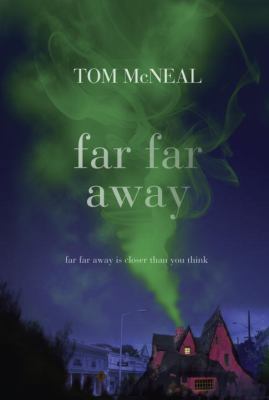
Far Far Away

Far Far Away
by Tom McNeal
Alfred A. Knopf, 2013.  369 pgs. Young Adult

In some respects, this is a dreadful story, grim in the manner of Grimm's original fairy tales.  And, in fact, Jacob Grimm is the ghostly narrator of the deeply affecting story of Jeremy Johnson Johnson.  Jacob is trapped at his death in the Zwischenraum ("the space between"), unable to pass on to rejoin his beloved brother Wilhelm in death, or to partake of the blessings of Heaven. He must stay because of the Thing Undone, something he still must accomplish though he doesn't know what it is.  He does know that it involves staying with Jeremy and somehow protecting him from The Finder of Occasions, an agent of evil who lives somewhere near but whose identity is unknown. Jeremy can hear Jacob--no one else can--and the interplay of their lives, Jacob's finished and Jeremy's beginning, creates many poignant moments. Interwoven with that tenderness is a terrifying suspense. The reader knows, well before Jacob or Jeremy who the Finder of Occasions is, though the depth of his evil is breathtaking even sort of knowing what is coming. Far Far Away bids well to become a modern classic, a timeless new story in the beguiling tradition of the timeless tales of the Brothers Grimm themselves.  I defy anyone to read the last page of this story without at least tearing up, and maybe crying outright.

LW

Breaking Point

Breaking Point
by C. J. Box
G. P. Putnam's Sons, 2013.  367 pgs. Mystery

Joe Pickett, Box's Wyoming Fish and Game officer, heads for the hills in this story of a man apparently driven to homicide by the inexplicable and punitive excesses of the Environmental Protection Agency. Some of this narrative may seem far-fetched, but Butch Roberson's story is based on the true story of  the Sackett family in Idaho who battled the EPA to a unanimous Supreme Court ruling in their favor. In any case, Roberson is on the run and Joe is picked to head up a posse of EPA agents who don't know a stirrup from a saddle horn. Trying to track Butch, keep the greenhorns safe, and outrun a forest fire, Joe has plenty on his mind, especially when he finds his man and a different story than everyone supposes to be true. Box does his usual fine job of evoking and describing the Mountain West, as well as telling a ripsnorting but also thought-provoking tale.

LW


Monday, July 22, 2013

Cotton Tenants: Three Families

Cotton Tenants:  Three Families
by James Agee, photographs by Walker Evans
Melville House, 2013.  224 pgs. Nonfiction

James Agee and Walker Evans were commissioned in 1936 to write an article about Alabama tenant farmers for Fortune magazine. This book is that article which was not printed at the time it was written, probably because it was not the best fit for so overtly capitalistic a magazine.  Whatever the reason, it is our good fortune now that the manuscript has been rediscovered and printed. Agee is one of the great prose stylists of American literature, with a meager output because of his untimely death. In this book, he reveals the plight of white tenant farmers (blacks were even worse off) who worked themselves literally to death for the landowners for whom they did all the work and went shares or chargebacks. Walker Evans' classic black and white pictures perfectly illustrate Agee's text mostly dispassionately written so as to highlight the plight of people without decent clothing, with never enough food, with no doctor available to them or their children (seven kids dead in one family). Occasionally a bitter irony breaks through Agee's austere presentation, and one feels to agree with his "thesis statement for the work":  "A civilization which for any reasons puts a human life at a disadvantage; or a civilization which can exist only by putting human life at a disadvantage; is worthy neither of the name nor of continuance."

LW

Wednesday, July 10, 2013

A Serpent's Tooth

A Serpent's Tooth
by Craig Johnson
Viking, 2013.  335 pgs. Mystery

In Johnson's latest Walt Longmire adventure, a "lost boy" kicked out of a polygamous compound of the Apostolic Church of the Lamb shows up in Longmire's jurisdiction, followed closely by his bodyguard, a man who thinks he is Orrin Porter Rockwell. Both wind up in jail watching an old video of My Friend Flicka, the only movie they have ever seen, but apparently they are there on the revolving door plan because they keep leaving and getting recaptured or moseying back on their own.  In the meantime, the neighbors and the Sheriff's Department are having run-ins with Cord's church folk until bit by terrible bit it becomes clear that the Apostolic Church compound is mostly a front for something much more grim and deadly. Johnson takes no particular pains to separate actual Mormon theology from offshoot dingbattyness, but if you can divide the wheat from the chaff as you go along, this is a really good story.

LW

Saturday, July 6, 2013

Italian Ways: On and Off the Rails from Milan to Palermo

Italian Ways:  On and Off the Rails from Milan to Palermo
by Tim Parks
W. W. Norton, 2013.  261 pgs.  Nonfiction

Tim Parks takes to the rails in search of the Italian character in this entertaining, thought-provoking travel narrative. A British expatriate who has lived and taught in Italy for over thirty years, Parks has just enough distance to see his adopted country clearly, from the outside in, as it were, but also to share his love for (most of) the characters he meets.  And characters they are, from the train conductor (capotreno) who refuses to accept an online ticket because it isn't printed out, to the elderly pensioner who claims to have lost her ticket to Rome and leaves the train screaming, only to climb aboard the next train and work the same trick until there she is--Roma.  Italian Ways is a rich and revealing delight of a book.  What a great way to travel--Mr. Parks endures the heat, the crowds, the broken ticket machines and incomprehensible schedules, so that we armchair travelers can enjoy a great book in peace and quiet.

LW

Friday, June 28, 2013

The Ocean at the End of the Lane

The Ocean at the End of the Lane
by Neil Gaiman
William Morrow, 2013. 181 pgs. Fiction

The Ocean at the End of the Lane is a beautiful piece of storytelling that feels as much a dream to the reader as the narrator. An unnamed man finds himself driving to the end of his childhood home’s lane and staring into a duck pond he also knows is an ocean. So he begins to remember his long-ago encounter with the Hempstock women, who have lived longer than the earth and can snip time out of reality with sewing tools.

Neil Gaiman is masterful at creating an atmosphere inside the reader’s mind by carefully manipulating every detail of language, plot, and setting. It is one of those books that you can’t even remember having read afterwards, you can only remember the feelings and images that floated through your head. The book leaves the impression of almost reachable magic and a reality old, fragile, and malleable. Highly recommended.

-JM

Saturday, June 22, 2013

Reboot

Reboot
By Amy Tintera
HarperTeen, 2013, 365 pgs. Young Adult

Wren rebooted after being dead for 178 minutes. The reboots are controlled by HARC and used as soldiers to keep the humans under control. She is one of the strongest and most ruthless reboots and has never questioned all the people she has had to capture or kill over the years. But that all changes when she starts to train Caleb-22, a reboot that was dead for such a short amount of time that he still has many of his human traits and doesn't want to accept the way things are.

There were some elements of the story that didn't really add up and the writing had some flaws but it was a quick enough read that I was able to overlook a lot. It was also pretty violent so if that bothers you, you may want to steer clear. Readers who enjoyed Divergent may like this book, just be prepared for it to focus more on the inexplicable romance between the two main characters; mixed in with a lot of blood, pain, broken bones, and death.

AL

Friday, June 21, 2013

Wool 1-5


Wool 1-5
by Hugh Howey
Simon and Schuster, 2013. 508 pgs. Science Fiction


Whenever anyone talks about successful self-published books the ubiquitous Shades of Grey comes into the conversation, but its time another self-published title took over: Wool by Hugh Howey. In Wool’s post-apocalyptic world humans live in underground silos, controlled by the fear of being sent outside into the toxic air for committing minor crimes. Howey opens with the first rule of the silo: anyone who expresses a desire to go outside gets their wish. The silo’s Sheriff wakes up on the third anniversary of his wife’s death and calmly states that he’d like to leave. As he waits, he wonders whether he will clean the Silo’s only window before his oxygen runs out… but those sent outside always clean.

Wool is a dark, thought-provoking dystopia, perfect for those who loved The Giver as a kid but who’ve found new-fangled YA hits like Matched or Uglies too perky and swift. Howey creates the perfect grimy, grungy atmosphere by centering his work on the worn, winding 140-floor staircase that connects the Silo’s stratified society. There is something deeply compelling and metaphoric about how his characters trudge up and down these stairs, trying to pull together their society. A highly recommended read for adult dystopian fans.

-          JM

Wednesday, June 19, 2013

As I Lay Dying

As I Lay Dying
by William Faulkner
Modern Library, 2012. 231 pgs. Fiction

Anyone planning on seeing James Franco's movie version of Faulkner's classic ought to read the book first because so much of the richness of the narrative lies in the internal dialogue of its characters. Anse Bundren has promised his wife Addie that when she dies, he will carry her body back to her homeplace in Jefferson, Mississippi. Sons Cash, Darl, Jewel, and Vardaman, along with daughter Dewey Dell join Anse in a misbegotten odyssey to take their mother home. A flooding river, the death of their mules, the putrefaction of the deceased, which draws vultures by the score, all combine against the Bundrens as they also fight their own natures and their own blood to find some meaning in what they are doing. Blackly humorous and tragic, richly drawn, this stream-of-multiple consciousnesses novel deserves the classic place it occupies in our literary pantheon.

LW

Tuesday, June 18, 2013

The Clockwork Princess

The Clockwork Princess
By Cassandra Clare
Margaret K. McElderry Books, 2013.  570 pgs. Young Adult

There is great unrest at the Shadowhunters London Institute. Jem has run out of his medicine and is dying. Will is hiding his true love for Tessa, who happens to be engaged to Jem. Charlotte, who is head of the Institute, is fighting the Shadowhunters hierarchy to maintain control. All the while, Mortmain is determined to destroy the Shadowhunters with his ruthless army of automatons and kidnap Tessa to use her shapeshifting talent for his gain.

It could have been I was just in the right mood for this type of book and it could also have something to do with Daniel Sharman’s narration that sweeps you into the story, but this has been one of my favorite books this year. It has action, humor, and romance— pretty much everything I hope for in a book.  Clare’s Infernal Devices trilogy is far superior to her Mortal Instruments series. I just wish this was the series picked up for film rights instead of the other.


KK

Monday, June 17, 2013

His Majesty's Hope


His Majesty’s Hope 
by Susan Elia Macneal
Bantam Books, 2013. 354 pgs. Mystery

Maggie is off on her first foreign mission for MI5, right into the heart of Berlin during WWII. Her objective: to plant a bug in the home of a high society Nazi supporter Clara Hess. The story also follows Elise, a German nurse, who just happens to be Clara Hess' daughter.
Maggie’s personal and family life is just as complicated before and at times can be a bit frustrating, but I guess that is how relationships normally are. The addition of Elise’s character allows the reader a snippet of the German home front and the struggles they went through. And once again Macneal throws in that one little extra plot twist at the end that leaves you wanting.  Not a perfect read, but an enjoyable one.

KK

Wednesday, June 12, 2013

Walkable City: How Downtown Can Save America, One Step at a Time

By Jeff Speck
Farrar, Straus and Giroux, 2012. 312 pages.  Nonfiction

In Walkable City Speck lays out what it will take to make our cities walkable.  At the outset the author states that for people to really take to the streets with their feet their walks must be useful, safe, comfortable, and interesting. He explains what he means by each of these qualities and demonstrates what how each these qualities affects the walkability of an urban environment. Then he lays out 10 steps to achieving walkability. The steps involve automobiles, parking, mixed use neighborhoods, public transportation, bicycles, sidewalks, and roads.


Speck illustrates his arguments with statistics, studies, and anecdotes. While some of the arguments seem a bit strained, overall the author’s proposals are compelling. There are quite a few counter-intuitive lessons taught in this book including more and bigger roads causes congestion, free parking is really expensive, and putting bicycles into the traffic makes streets safer. Interesting and informative.

Revolutionary Summer: The Birth of American Independence

Revolutionary Summer:  The Birth of American Independence
by Joseph J. Ellis
Knopf, 2013.  219 pgs.  History

Most of us have a few bright sparks of knowledge in a sea of gray, with regard to the American Revolution.  We know Paul Revere's ride, Washington crossing the Delaware, the Battle of Bunker Hill.  In Joseph J. Ellis' latest book, we get specific and fascinating detail about the rise and near fall of the Continental army in the summer when the Declaration of Independence was signed. Even the indispensable George Washington made enormous mistakes which might have led to the early demise of the Patriot cause, but the lingering desire of  the British generals for a peaceful resolution and the insistence of General Nathanael Greene that General Washington set his pride aside and make a run away from the water and the world's greatest Navy, to give the Continentals a chance.  Joseph J. Ellis has won both the Pulitzer Prize and the National Book Award for his work on the founding fathers, and Thomas Jefferson in particular.  In this book, he gets right to the  heart of the grit, and sorrow, suffering and glory of the beginning of the United States of America.

LW

Monday, June 10, 2013

Relish: My Life in the Kitchen

Relish: My Life in the Kitchen
By Lucy Knisley
MacMillan Children's Publishing Group, 2013. 192 pages.  Nonfiction Graphic Novel

This graphic novel portrays a series of vignettes of important moments in the author's life involving food.  Like many of us, food shaped certain memories, suffused them with the recollection of flavors, aromas, and all sorts of tastiness.  Each vignette ended with a fabulous graphically rendered recipe of significant importance to the stories she tells.

This is a simple enough memoir of the author's formative years, but filled with humor and appreciation for the way food can knit together friendships and the significant moments of our lives.

BHG

Thursday, June 6, 2013

The Riddle of the Labyrinth

The Riddle of the Labyrinth:  The Quest to Crack an Ancient Code
by Margalit Fox
HarperCollins, 2013.  363 pgs.  Nonfiction

The decipherment of Linear B, the language of ancient Crete, has never had the same press or romance as the cracking of the code of Egyptian hieroglyphics (thanks to the Rosetta stone). But, the greater difficulty, and even seeming impossibility, of the task gives this story an intellectual vigor and sense of urgency that makes it a great puzzle book for summer reading. Although Fox gives attention to each of the three principals--the archaeologist who discovered the Linear B tablets, the scholar who laid all the groundwork, and the amateur linguist who finished solving the puzzle, the book's main character is Alice Kober, a professor of classics at Brooklyn College who devoted every spare minute, and ever scrap of rationed paper (during wartime) to decoding Linear B.  Largely overlooked in linguistic history, and overworked and neglected in her time, she died at an early age before she could finish her life's work. One may learn much about the nature of language from this text, but also the nature of hard physical and intellectual work in pursuit of a transcendent goal.

LW

Tuesday, June 4, 2013

Crewel

Crewel (Crewel World, #1)
By Gennifer Albin
Farrar, Straus and Giroux, 2012. 368 pages. Young Adult

Adelice Lewys has the ability to weave the very fabric of reality, and her parents have painstakingly trained her to hide her talent for her entire life.  If Adelice's abilities are discovered, she will be ripped from her family and taken away to become a Spinster, an elite woman who weaves the reality of their world and keeps the rains coming, the crops growing, and the people living and dying.  While it may sound like an idyllic fantasy, the truth is that it's hardly more than a prison.

This has a great premise and an interesting world. I thought how reality was a fabric that could be manipulated was very cool and well-imagined. There is even some romance and an interesting ending that will leave you hungry for more from the next book.  I did find the flow of the writing in this book to be a bit choppy at times, but the plot moves quickly enough that you will still have a hard time putting it down.

BHG

Scarlet

Scarlet (Lunar Chronicles, #2)
By Marissa Meyer
Feiwel and Friends, 2013. 452 pages.  Young Adult

Sequel to Cinder (the cyborg Cinderella story), this is Little Red Riding Hood's tale, which intermingles with Cinder's continuing story from the first book.

Scarlet lives in the French countryside, and has been frantic since her grandmother went missing two weeks earlier.  When the police fail to provide any help, Scarlet decides to take the search into her own hands, with some help from Wolf, a street fighter she just met and who seems inexplicably drawn to her.

Whatever I may have thought I knew about the traditional Red Riding Hood tale, I genuinely did not know what Wolf's motives were or what his ultimate role would be for most of this novel, and I loved watching the mystery unfold.  Scarlet is an interesting new character, and the segments of Cinder's continuing story included here were very satisfying.  All in all, I think I liked this even more than the first book.  Recommended for teens and older.

BHG

Eleanor & Park

Eleanor & Park
By Rainbow Rowell
St. Martin's Press, 2013.  325 pages. Young Adult

Eleanor is the new girl in school, and Park is the only person who begrudgingly moves over to give her a seat on the bus.  Off to a frosty start, Eleanor and Park ride the bus to school each day in silence, until Park notices Eleanor following along as he reads his comic books.  There, a tenuous friendship begins in this novel set in 1986.  We learn more about Eleanor, Park, and their families, but the heart of the book is the gradual progression of these two teens as they come together.

This is a story of first love, and it was excellent.  The characters were believable and complex, the plot could have easily been cliche but wasn't, and the story captivated me.  This will feel especially nostalgic for anyone who went to school during the 80's, but ultimately, anyone who has experienced or hoped for the thrill of their first love will find something to enjoy here.  There is some language, just like in any high school hallway, so while I wouldn't recommend this for younger teens, I would recommend this to most everyone else.  I listened to the audiobook and the narrators did an excellent job.

BHG

Friday, May 31, 2013

The Dinner

The Dinner 
by Herman Koch
Hogarth, 2012. 292 pgs. Fiction


The reader is lead through a four course meal by the decidedly unreliable narrator, Mr. Lohman, as he negotiates a ‘small’ family problem with his brother. As Mr. Lohman captures the reader’s trust with sly jabs at the upper-class and witty complaints, he slowly reveals his own history and the real trouble in his family. The narrator tries to uncover only what he wants his readers to see, but it becomes impossible to keep ignoring the strange contradictions in his story. What the reader glimpses through the cracks is both thrilling and disturbing.

 Hailed as the ‘European Gone Girl’, the Dinner doesn’t disappoint. Most thrillers capture the reader’s attention through fast-paced, action packed plotlines with young, glamorous protagonists and clearly defined villains. Not so here. The Dinner thrills because of its masterful storytelling, which slowly and creepily reveals the hero and the villain to be the same person. This is the sort of book that worms its way into your subconscious, so a small part of you will always think: people can justify anything to themselves.

 - JM

Tuesday, May 28, 2013

Norwegian by Night

Norwegian by Night
by Derek B. Miller
Houghton Mifflin Harcourt, 2013.  290 pgs. Mystery

When 82-year old Sheldon Horowitz finds himself an uneasy transplant to Norway, living with his granddaughter and her new husband, he doesn't have much time to reflect on his situation before he is thrust into the role of protector of a young boy from the upstairs apartment whose mother has been murdered practically in front of his eyes. Leaving his granddaughter a cryptic note about "lighting out for the territories," Sheldon and the young boy must avoid the killers, one of whom is the boy's father, and the police who may unwittingly hand the boy over to his dad. Multiple perspectives show the two heading directly into danger when they think they will soon be safe. Even more engaging than the suspense of the story, though, is Sheldon's mental and emotional journey as he simultaneously travels through his past with his deceased wife, a friend from next door who has passed away, and most importantly, with his son who was killed in Vietnam. Rich in philosophy, love, regret, and hope, Norwegian by Night is not just one of the best mysteries of 2013, but one of the best books.

LW

Friday, May 24, 2013

The World Until Yesterday

The World Until Yesterday: What Can We Learn From Traditional Societies? 
By Jared Diamond
Viking, 2012. 499 pgs. Nonfiction

 In his previous bestsellers (Guns, Germs, and Steel and Collapse), Jared Diamond has discussed his theories on why some cultures modernized more quickly than others. In The World Until Yesterday he takes a much more personal tone, describing what he has learned from those people of the world who have remained untouched by the rise of modern societies.

Having spent decades living with and studying traditional cultures in places like Papua New Guinea, the Amazon, and Kalahari, Diamond has vast catalog of personal experiences to draw upon. He provides descriptions of how these primitive peoples deal with each other, strangers, conflict, child-rearing, the elderly, danger, religion, language, health, and death. I have truly enjoyed Jared Diamond’s previous works and I enjoyed a great deal of this one. The first-hand accounts were by far the best parts and overshadowed some of the more dry portions of the book.

CZ